Round Lab-Grown Diamonds
Find a loose round lab-grown diamond for a solitaire ring, pendant or pair of earrings. Explore Uniglo Diamonds’ inventory, compare the specifications of individual stones and contact our Antwerp team to discuss your selection. Start with the appearance and diameter you want, then consider cut quality, colour, clarity and the price of the exact diamond.
Choose a Round Brilliant Diamond for Its Appearance
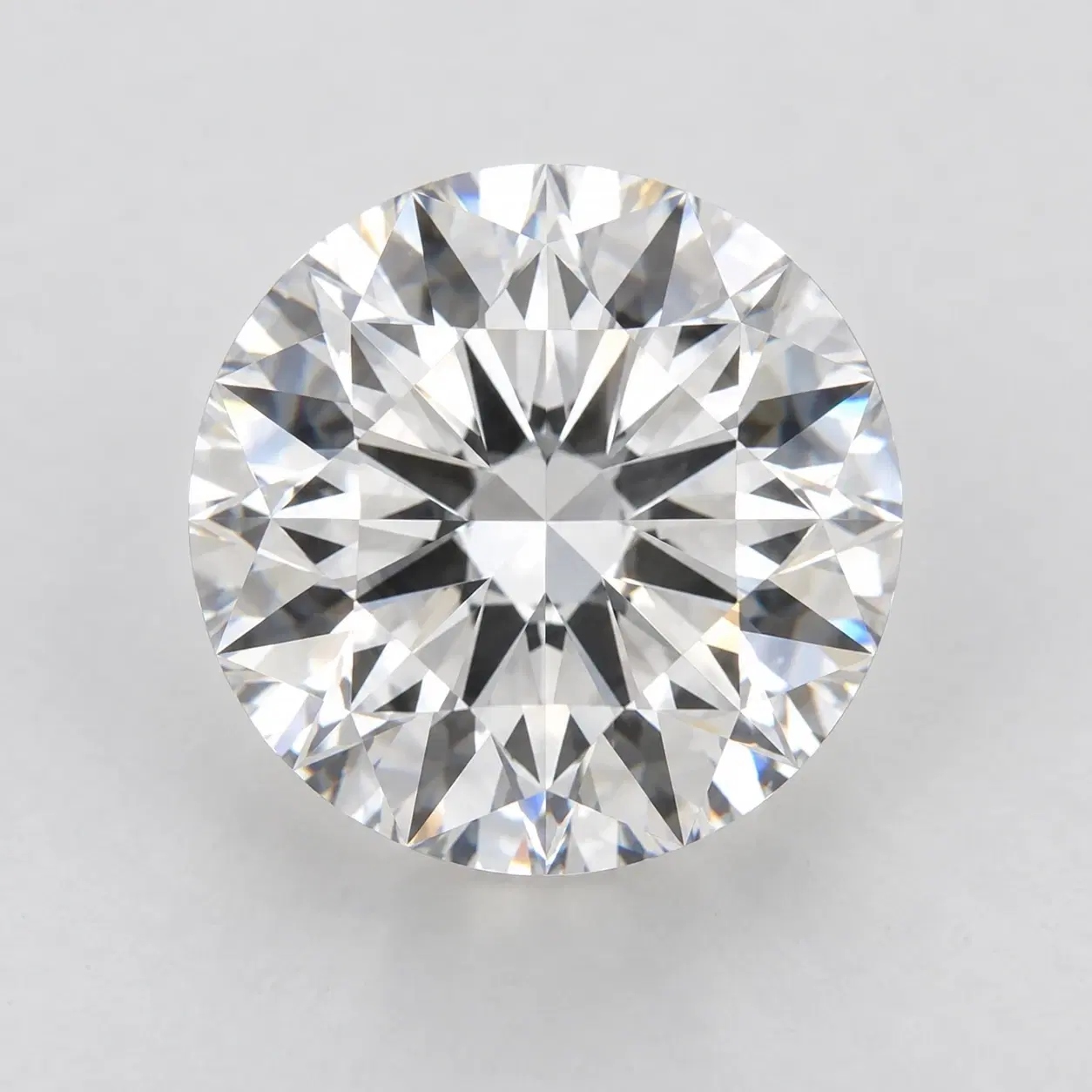
A round brilliant combines a circular outline with a facet arrangement designed to interact with light. Its appearance includes white-light reflections, coloured flashes and the changing pattern of bright and dark areas as the diamond, viewer or light source moves. These effects are commonly described as brightness, fire and scintillation. GIA explains diamond light performance.
The circular outline works particularly well when you want the diamond to be the visual centre of a design. A solitaire setting leaves the stone clearly visible, while a pendant or pair of studs gives the same shape a different scale and setting.
Individual round diamonds can still look different. When comparing options, look beyond a single photograph taken under strong lighting. Where available, review a video of the actual stone and ask for additional views if you cannot judge its appearance clearly.
Give Cut Quality a Place in Your Shortlist
For a round brilliant, the relationship between its proportions matters more than finding one supposedly perfect measurement. GIA’s research recognises that different combinations of proportions can produce strong brilliance and fire. A table percentage or depth percentage should therefore be considered alongside the rest of the diamond’s information. GIA’s explanation of round brilliant proportions.
Read the cut assessment provided by the issuing laboratory, where applicable, together with the finish grades and available imagery. IGI assesses round brilliant cut quality using proportions and studies of brightness, fire, scintillation and pattern; polish and symmetry are also recorded on its reports. IGI laboratory-grown diamond grading.
When enquiring, identify the diamonds you are comparing by their stock references. This makes it easier to discuss the characteristics of each stone rather than relying on a general description such as “excellent quality”.
Compare Diameter Alongside Carat Weight
Carat describes weight, while diameter helps you understand how wide a round diamond will look from above. One carat equals 200 milligrams, and two diamonds of the same weight can have different visible dimensions because of their proportions. IGI’s guide to carat weight.
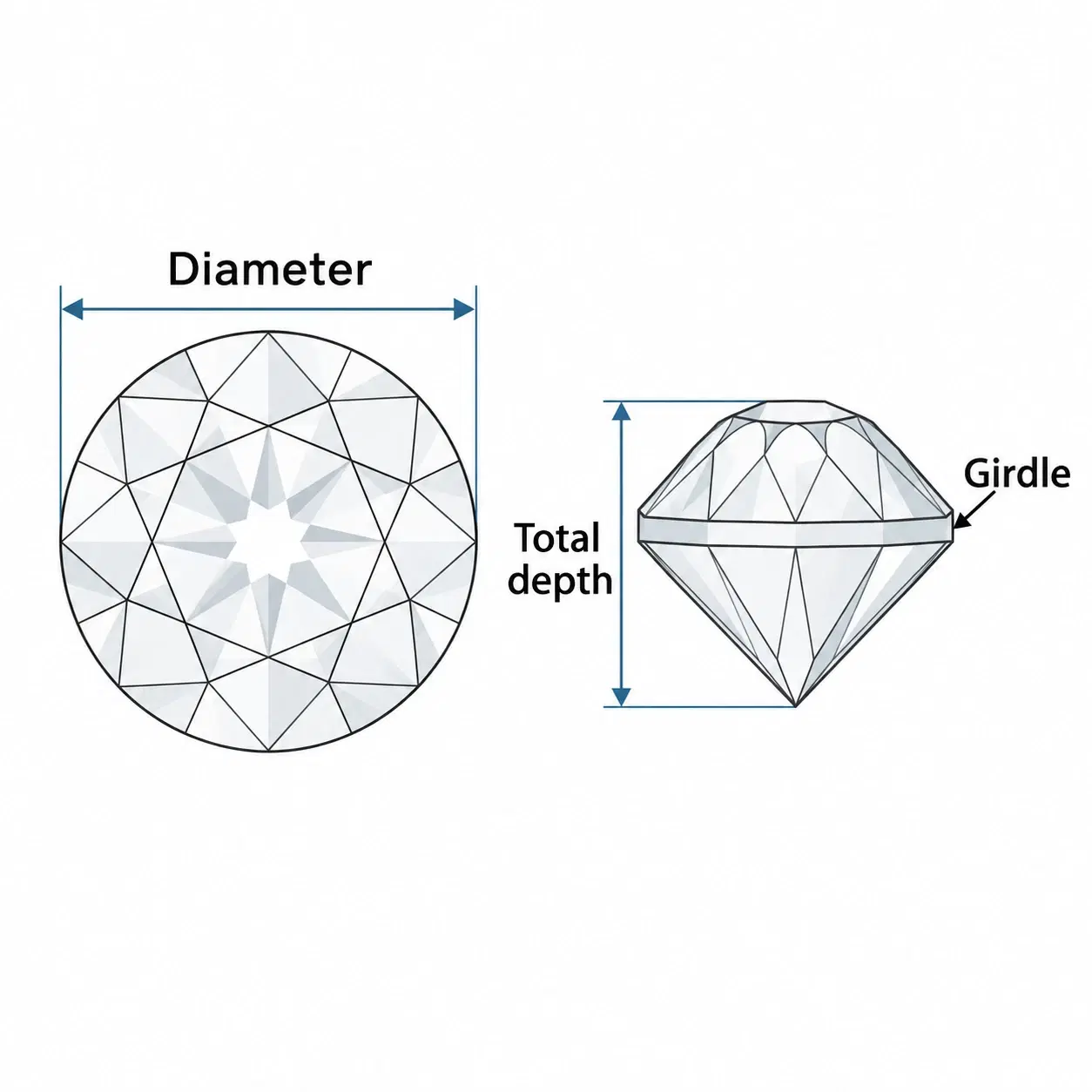
For a round stone, review the minimum and maximum diameter recorded in millimetres, together with its depth. If you already have a setting, share these measurements with your jeweller before purchasing. A setting intended for a particular carat weight may still need adjustment for an individual diamond.
| Detail to review | Why it helps when selecting a round stone |
|---|---|
| Minimum and maximum diameter | Shows the stone’s width across different directions and helps with setting-fit discussions. |
| Total depth | Helps your jeweller assess how the stone will sit within the setting. |
| Cut assessment and proportions | Provides information to consider alongside the diamond’s visible light performance. |
| Girdle description | Gives your jeweller another detail to review when assessing suitability for mounting. |
| Actual photographs or video | Helps you compare the individual stone’s appearance before deciding. |
A larger diameter is one consideration. Balance the visible size you want with the diamond’s appearance and the requirements of the finished piece.
Select Colour and Clarity for the Stone You Will Wear
Compare colour under similar viewing conditions wherever possible. Changes in lighting, background and camera settings can make two online images difficult to compare fairly. For a ring or pendant, also consider how the diamond will look with your chosen metal and any neighbouring stones.
Clarity grades describe characteristics assessed under magnification. IGI evaluates clarity at 10× magnification, considering factors including the size, location and nature of those characteristics. This is why the grade should be read alongside an assessment of the actual stone. IGI’s clarity assessment process.
If your priority is a diamond that appears clean without magnification, make that clear in your enquiry. Ask about the shortlisted stone under normal viewing conditions rather than assuming that a particular clarity grade guarantees your preferred appearance.
Buying a Single Stone or Selecting a Pair
For a solitaire ring or pendant, begin with the dimensions and appearance you want from the centre stone. If you are replacing an existing diamond, include the setting details and measurements requested by your jeweller when contacting us.
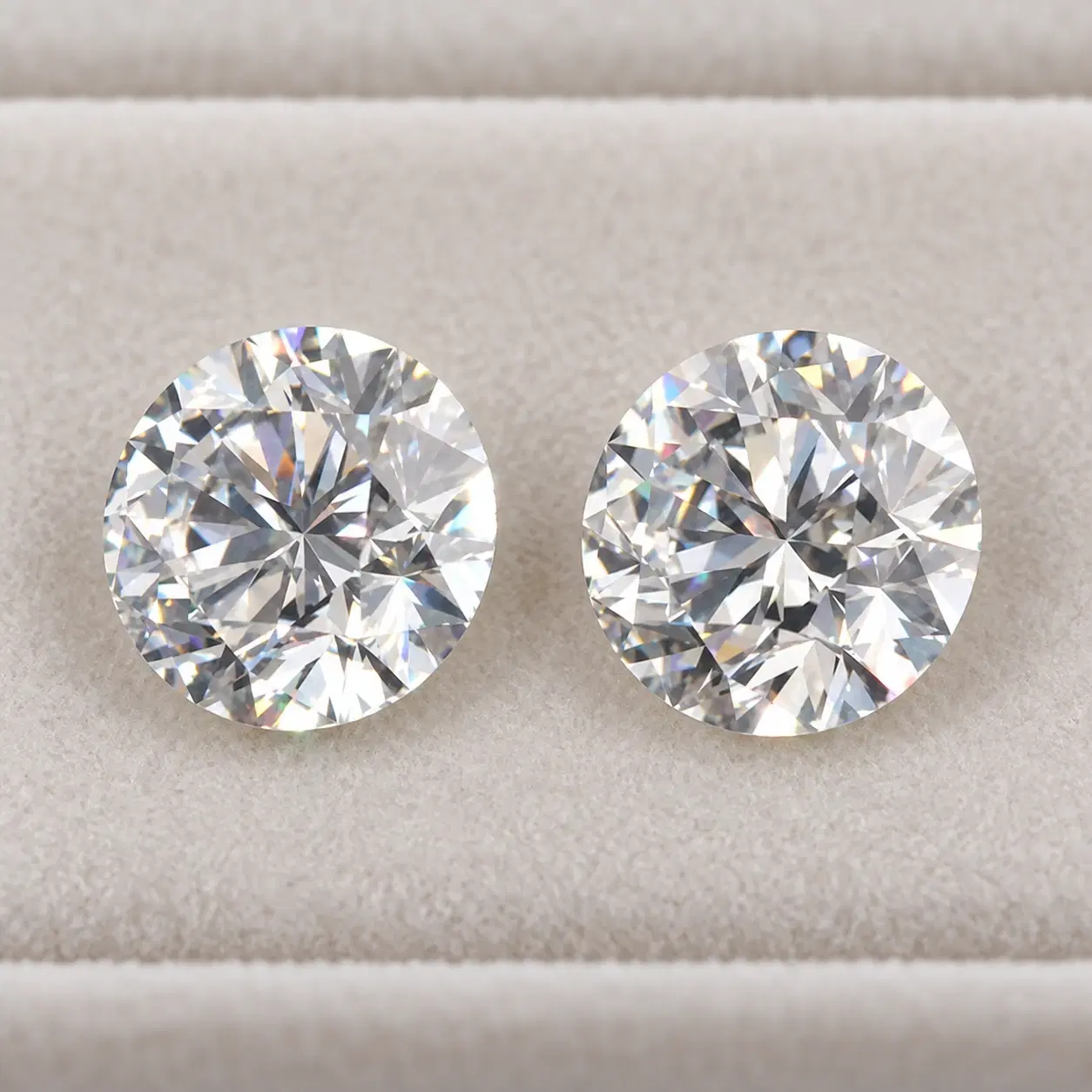
For earrings, explain that you are looking for a pair. Matching involves considering the two stones together, including their diameter and appearance. Be clear whether your preferred carat weight refers to each diamond or the combined weight: two 1.00-carat stones have a total weight of 2.00 carats.
We can discuss your requirements through a round-diamond enquiry, including whether you need one stone or help identifying suitable options for a pair.
Request a Quote for Your Chosen Round Diamond
Send us the stock reference or product link for any diamond you would like to discuss. Include your delivery country, budget and any required date. If you are still choosing, share your preferred carat range, diameter, colour and clarity so your enquiry gives the team a clear starting point.
Compare quotes for the exact stones being offered. Check the currency, availability and charges included in the total, and allow separately for your setting or jewellery-making costs. Before payment, confirm the delivery arrangements and the terms applicable to your order.
For broader pricing information, explore our lab-grown diamond price guide. To consider other shapes, visit our loose lab-grown diamond page.
Questions About Round Lab-Grown Diamonds
Is every round lab-grown diamond the same size at a given carat weight?
No. Carat weight alone does not determine diameter. Compare the measurements of the individual stones, particularly when you want a specific visual size or need to fit an existing setting.
Does Excellent polish mean the diamond has an Excellent cut grade?
No. Polish describes a finish characteristic. Read the report’s cut assessment separately, where provided, and consider it alongside the proportions and imagery. A listing that mentions Excellent polish alone does not establish the diamond’s overall cut grade.
Do I need the highest colour and clarity grades?
Your choice depends on your preferences, the individual stone and your budget. Compare what you can actually see, as well as the reported grades. If you have a particular requirement—such as a colourless grade or a stone that appears clean without magnification—include it in your enquiry.
Can I choose a round diamond for a setting I already own?
Yes, but ask your jeweller to confirm compatibility first. Provide the diamond’s minimum and maximum diameter, depth and report details. Similar carat weights do not guarantee that two stones will fit the same setting equally well.
Can I enquire about two round diamonds for earrings?
Yes. Tell us you need a pair and specify whether your target weight is per stone or for both stones combined. Include any diameter or setting requirements so the enquiry reflects the finished earrings you have in mind.
Find Your Round Lab-Grown Diamond
Explore the available inventory or contact Uniglo Diamonds with your preferred specifications. Whether you have selected a particular stone or are comparing several possibilities, include the details that matter to your design so we can discuss the next step.