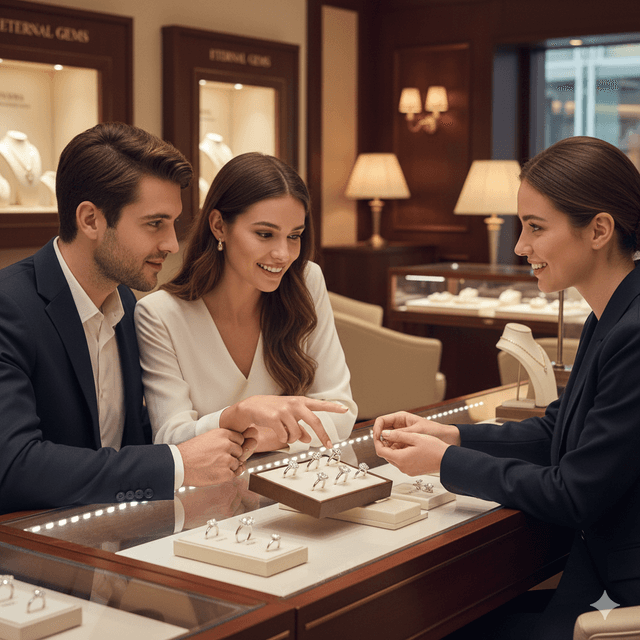
Asscher-Cut Lab-Grown Diamonds
Asscher-cut lab-grown diamonds combine a broadly square outline, cropped corners and stepped facets that create repeating geometric reflections. Their appeal lies in the visible structure of the cut: broad flashes of light and a sense of depth through the centre.
The diamond is grown in a laboratory before being cut and polished. Choosing an Asscher means assessing how that particular stone looks through its open facets, where clarity characteristics and colour can be more noticeable.
At Uniglo Diamonds, start with the appearance and dimensions you want, then compare the available stones individually. The grading report, actual photographs and intended setting should work together to inform your choice.
Start With the Step Pattern
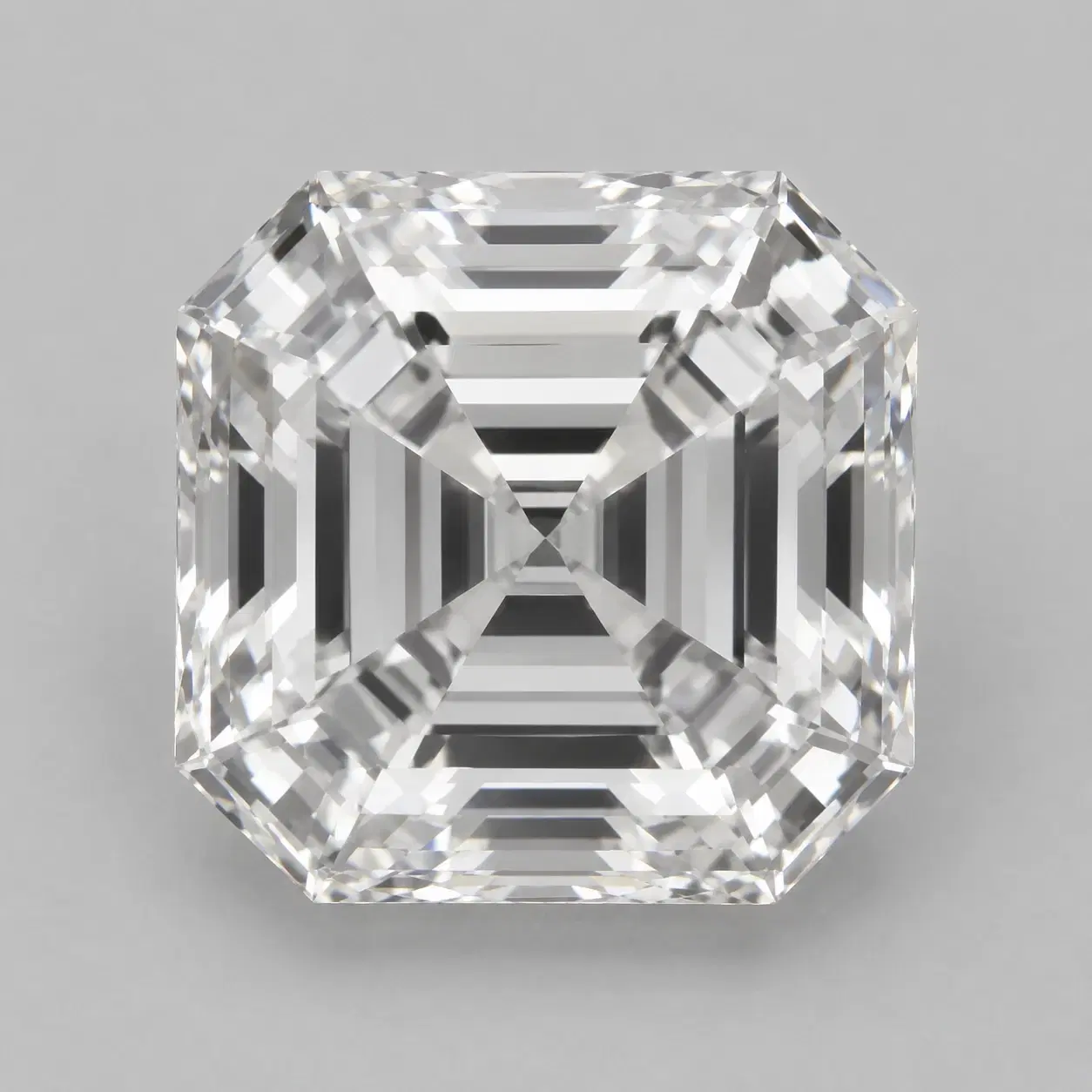
An Asscher’s layered reflections are often described as a “hall of mirrors”. GIA identifies this geometric appearance as a defining feature of the cut, with many examples also displaying an X-shaped pattern when viewed from above. GIA’s guide to Asscher diamond characteristics.
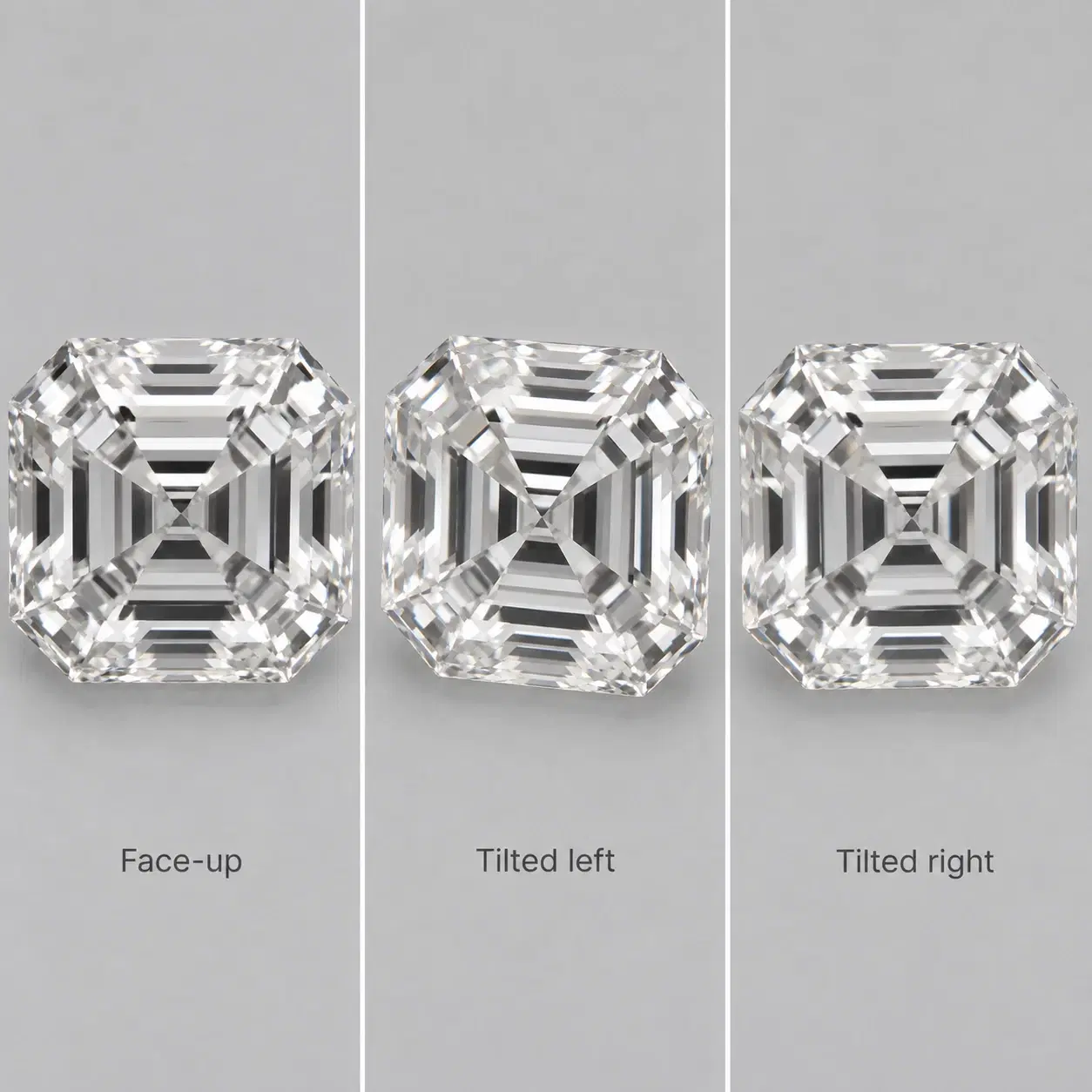
For your shortlist, examine how the reflections change as the stone moves. Look across the centre and towards the corners, checking whether the pattern remains visually balanced.
Our recommendation is to request a video of the actual diamond where available. If an area appears persistently dark or washed out, ask for another view under different lighting before reaching a conclusion. Camera position and surroundings can influence the appearance in a photograph.
Inspect Clarity Through the Table
The table is the large facet at the top of the diamond. In an Asscher, the open step-cut arrangement makes it especially useful to inspect what is visible through this central area.
GIA explains that clarity assessment considers an inclusion’s size, number, position, contrast and nature. A feature beneath the centre of the table can be more noticeable than one elsewhere in the stone. GIA’s explanation of diamond clarity assessment.
Use the report to understand the characteristics, then request a realistic view without excessive magnification. A heavily enlarged photograph can reveal details that would not be distracting during ordinary wear.
If you are comparing VS and VVS options, assess the actual stones before deciding whether a higher grade gives you a visible benefit. Keep cut quality and appearance in the decision rather than selecting by clarity alone.
Judge Colour in Context
Asscher diamonds can show body colour more readily than many brilliant-cut shapes because of their open facets. GIA therefore identifies colour as an important consideration when selecting this cut. GIA’s Asscher selection guidance.
Ask to compare shortlisted stones under consistent lighting against a neutral background. If your design includes side stones, request a comparison of how their colours look together.
Decide whether you prefer a colourless appearance or are comfortable with visible warmth. There is no need to impose the same preference on every buyer, but the colour you choose should be a deliberate part of the design.
Check the Outline and Visible Dimensions
Look at the relationship between the four main sides and the cropped corners. Asschers with more pronounced corner cuts can appear closer to an octagon, changing the impression of the outline.
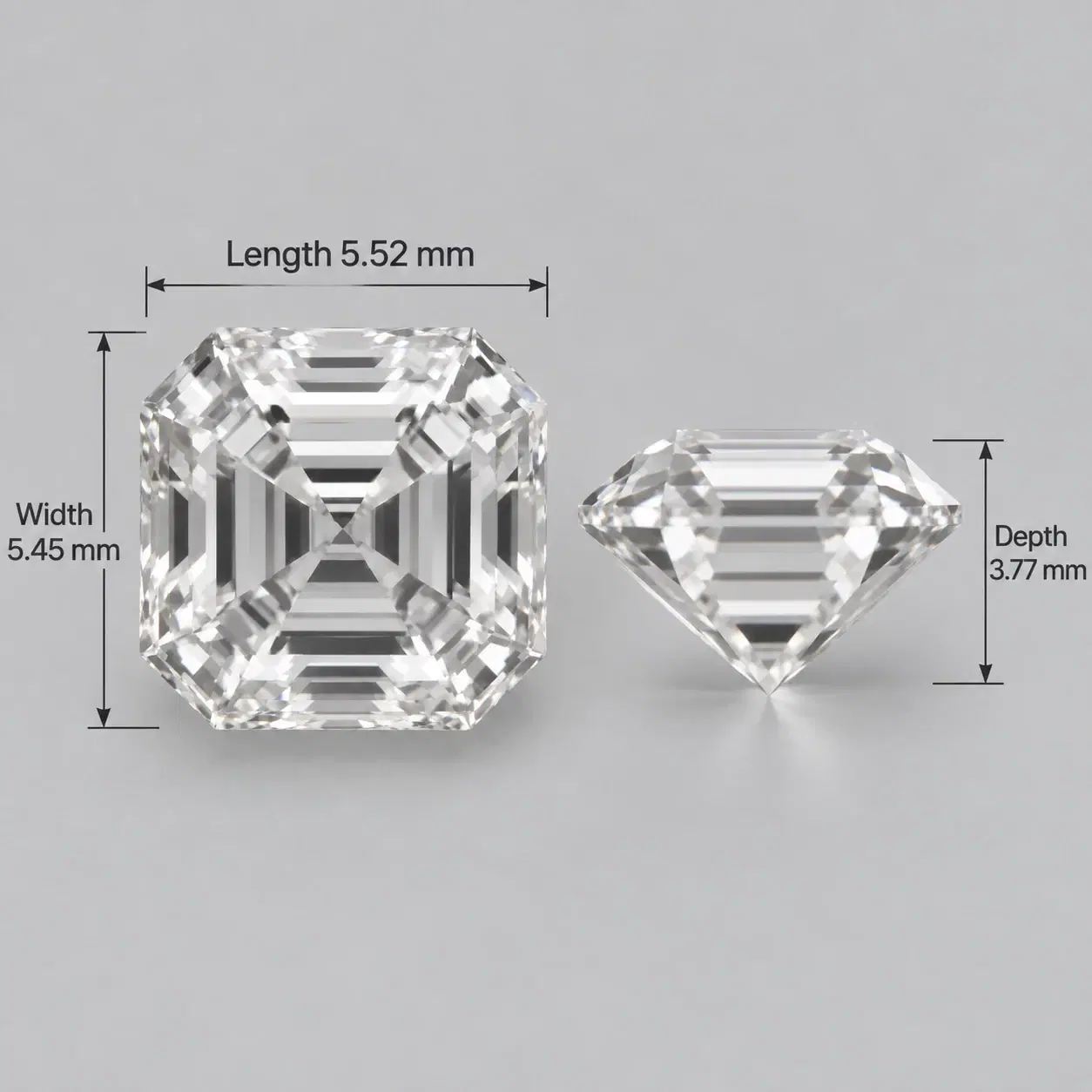
Compare the length and width measurements if you want a distinctly square appearance. Values close to equal describe a squarer outline, but photographs are still needed to judge the balance of the corners and facets.
Carat weight does not establish visible size. Diamonds with the same weight can differ in dimensions because of their proportions. Compare the measured length, width and depth alongside the carat figure. IGI’s explanation of diamond weight and size.
For an existing setting, obtain the jeweller’s required measurements before selecting the stone.
Read Cut and Report Details Together
Table percentage, depth percentage, polish and symmetry provide useful information, but none should be treated as a complete description of the diamond’s appearance.
IGI’s fancy-shape cut-grading process combines finish assessment, proportions, shape-specific craftsmanship and light return. It states that proportions alone cannot determine fancy-shape cut quality. IGI’s cut-grading methodology.
Check whether an advertised cut grade appears on the laboratory report or is a seller’s description. Also confirm the laboratory-grown identification, report number, measurements and weight against the listing.
Where a report-number inscription is present, ask for it to be matched to the document under magnification. IGI explains how inscriptions help identify a stone and connect it to its report. IGI’s laboratory-grown diamond report information.
Our IGI-certified lab-grown diamond guide provides more detail about the report fields.
Choose a Setting That Suits the Outline
When discussing a setting, ask how much of the cropped corners and outer steps will remain visible. Prong placement and the surrounding metal should support the design you want while securing the actual stone.
Have your jeweller review the diamond’s dimensions and depth before finalising the mounting. This is particularly useful when adapting a setting originally made for a different square-shaped diamond.
A photograph of the intended design can help communicate your preference, but the final fit needs to be assessed against the selected diamond.
Request Comparable Asscher Diamond Options
A useful enquiry should include:
- Size and outline: Your preferred dimensions or carat range and any existing setting requirements.
- Appearance: Your colour preference and a request to review visible clarity and step reflections.
- Budget and documentation: Your budget, the report for each shortlisted stone and a current complete quotation.
Confirm whether the quote covers the loose diamond alone and ask about applicable delivery, taxes or setting charges. For the broader cost factors, see our lab-grown diamond price guide.
Frequently Asked Questions
Is an Asscher-cut lab-grown diamond the same as an emerald cut?
Both use step-cut faceting, but their typical outlines differ. Asschers are broadly square with cropped corners, while emerald cuts are commonly rectangular. Our diamond shape guide explains the wider differences.
Does an Asscher diamond need VVS clarity?
Not automatically. A suitably chosen VS diamond may meet your expectations, but the position and visibility of its inclusions need inspection. Compare the actual stones rather than assuming a particular grade always provides the best result.
Why can two Asscher diamonds of the same carat weight look different in size?
Their proportions can distribute the weight differently. Compare length, width and depth measurements, together with photographs shown at the same scale, to understand the visible difference.
Do all Asscher diamonds have identical faceting?
No. Asscher diamonds can vary in proportions, angles and cutting details. GIA describes these variations, which are another reason to review the individual stone rather than rely on a generic product image. GIA’s explanation of Asscher-cut variations.
Find Your Asscher-Cut Lab-Grown Diamond
Share your budget, preferred size and intended jewellery design with Uniglo Diamonds. Include any setting measurements already confirmed by your jeweller.
Request available options with their reports and actual images so you can compare the step pattern, visible clarity, colour and proportions before choosing.