Heart-Shaped Lab-Grown Diamonds
A heart-shaped diamond has an unmistakable outline: two rounded upper sections, a central indentation and a pointed lower end. Choosing one involves looking closely at how those features work together, both in the loose stone and in the finished jewellery.
When comparing heart-shaped lab-grown diamonds, start with the silhouette. Does the heart look balanced? Is its outline easy to recognise at normal viewing distance? Then assess its brightness, visible clarity and suitability for your chosen setting.
What makes a heart-shaped diamond look balanced?
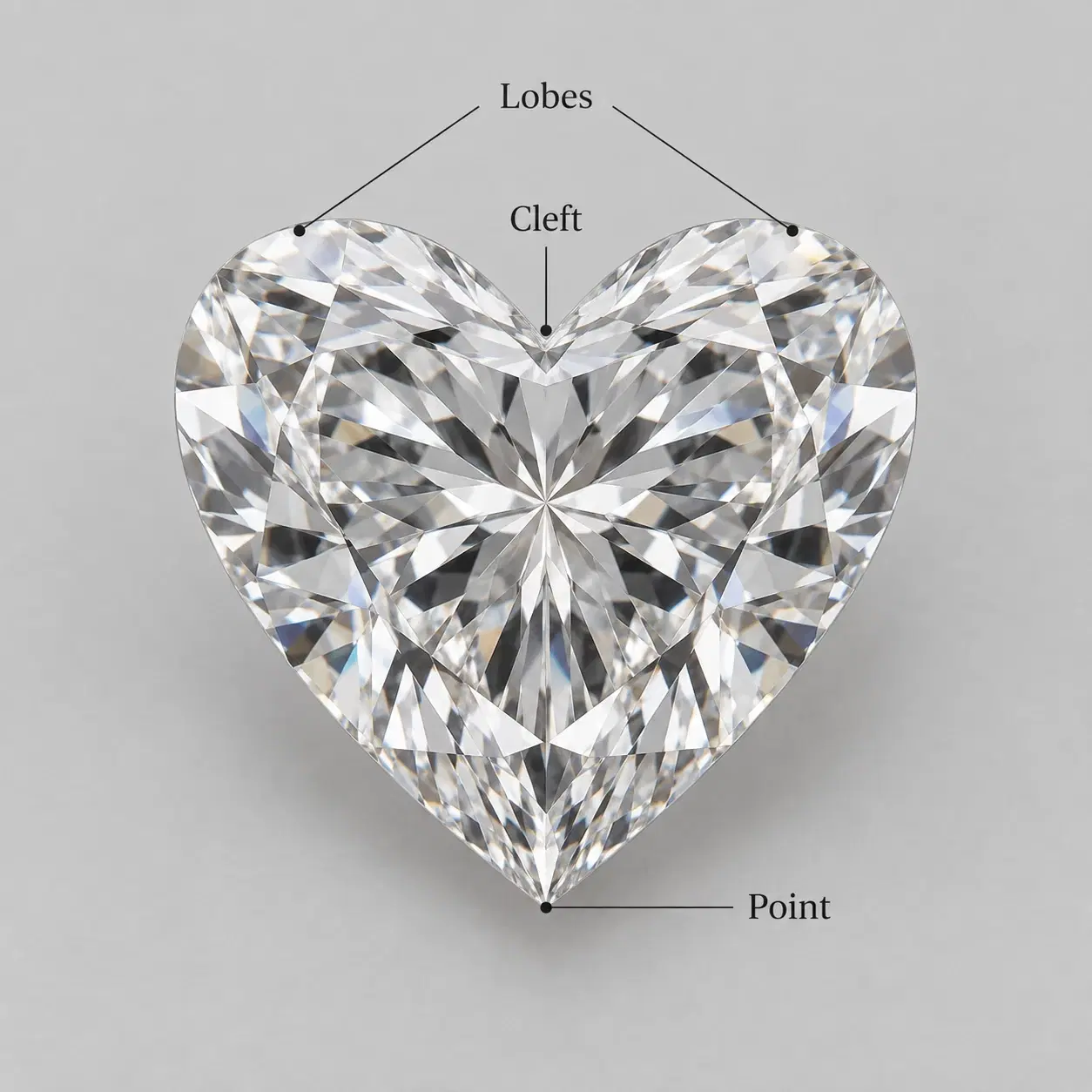
The two upper curves are called lobes, and the indentation between them is the cleft. Together with the lower point, they give the diamond its recognisable shape.
View the diamond directly from above and imagine a vertical line through its centre. Compare the left and right halves, paying attention to the height of the lobes and how evenly the sides taper towards the point. GIA identifies matching halves and a clearly defined outline as important selection considerations. GIA’s heart-shaped diamond guide.
| Feature | What to examine |
|---|---|
| Upper lobes | Similar size, height and curvature on both sides |
| Central cleft | A clear indentation positioned between the lobes |
| Outer sides | A balanced outline without distracting bulges or flat sections |
| Lower point | Alignment with the centre of the heart |
Use a straight-on photograph for this comparison. An angled image can make one side appear larger, so request another view before judging an apparent imbalance.
Compare proportions and visible size
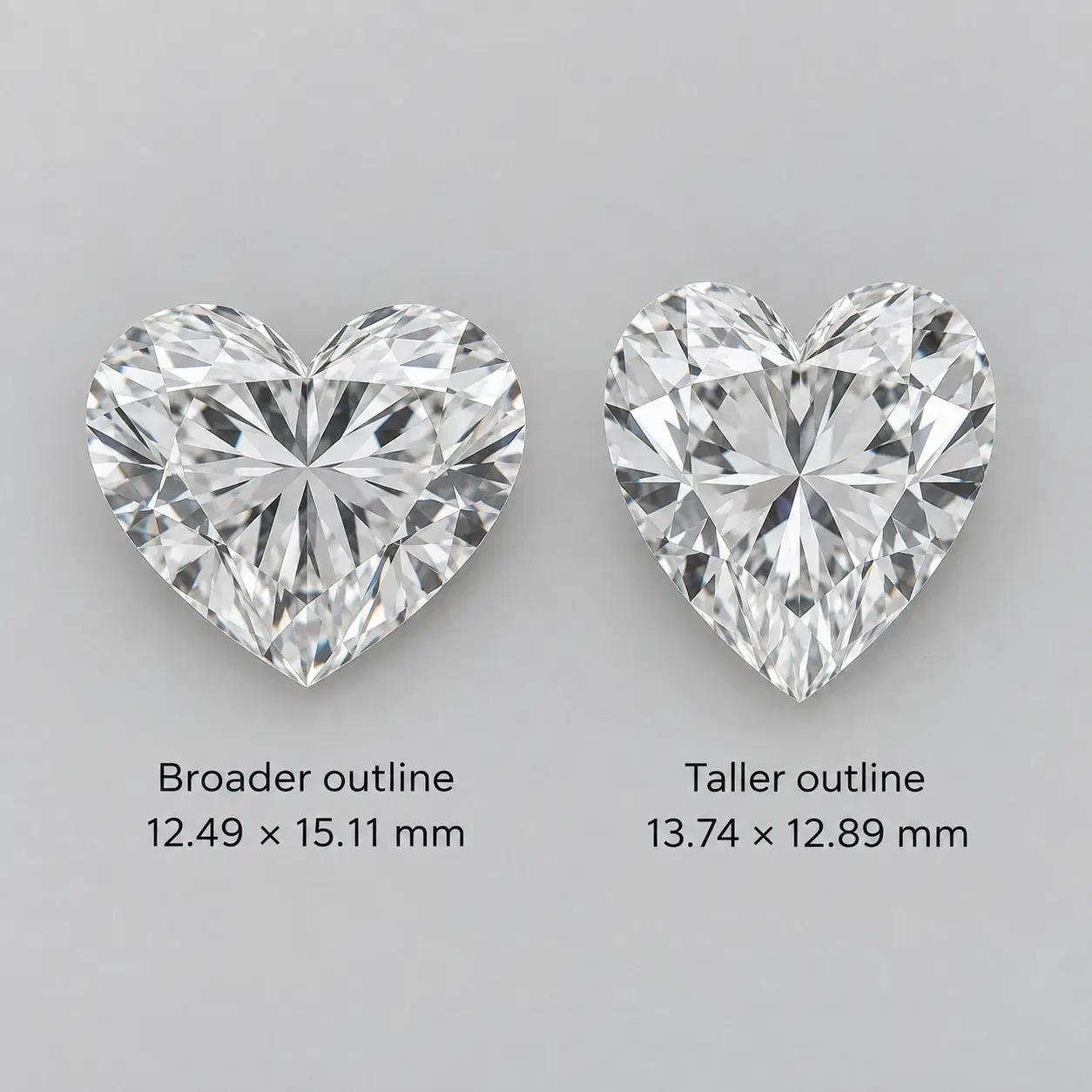
Some hearts have a broad outline; others look taller and narrower. Length-to-width ratio helps describe this difference, but it does not establish whether a diamond is well cut.
For a heart shape, length runs from the lower point to an imaginary line across the tops of the lobes. Width is measured across the widest part. A ratio around 1.00 indicates similar length and width; compare the photograph alongside the measurements to decide which outline you prefer. GIA’s guidance on heart-shaped gemstone proportions.
Carat weight measures weight, so two hearts with the same carat weight can have different visible dimensions. Check the measurements in millimetres when comparing how much space each diamond will occupy in a ring, pendant or earring. IGI’s guide to the diamond 4Cs.
Ask to see shortlisted diamonds at a comparable scale. Large product images are useful for inspecting detail, but also consider how clearly you can recognise the heart when viewing the proposed jewellery at an everyday distance.
Look beyond a single sparkle photograph
A balanced outline deserves a closer look at the diamond’s light performance. Request a video showing gentle movement and, where possible, views under more than one lighting condition.
Watch the centre and both lobes. Notice whether bright and dark areas change as the diamond moves, and whether any broad area remains distracting across several views. Heart-shaped brilliant cuts can show a bow-tie-like dark area; its prominence matters more than the label alone. GIA’s advice on assessing heart-shaped gems.
Avoid choosing solely from a table or depth percentage. IGI explains that fancy-shape cut assessment considers proportions alongside polish, symmetry, craftsmanship and light return. Proportions alone cannot establish cut quality, and Excellent polish and symmetry are not automatically an Excellent overall cut grade. IGI’s fancy-shape cut-grading process.
Choose colour and clarity by inspecting the actual diamond
Use colour and clarity grades to organise your shortlist, then compare the stones themselves. There is no single grade combination that suits every budget, diamond size and jewellery design.
For colour, request comparable views against a neutral background. When choosing a centre stone for jewellery with other diamonds, ask to see the stones together before deciding whether their appearance works for you.
For clarity, examine the central viewing area and ask about any noticeable characteristics near the point or outer edge. A magnified image helps locate a feature, but a qualified assessment is needed to judge whether it affects durability.
IGI assesses clarity at 10× magnification and considers factors including the size, number, location and nature of characteristics. The grade therefore needs to be read alongside the individual diamond’s images and report. IGI’s explanation of laboratory-grown diamond grading.
Choose a setting that preserves the heart outline
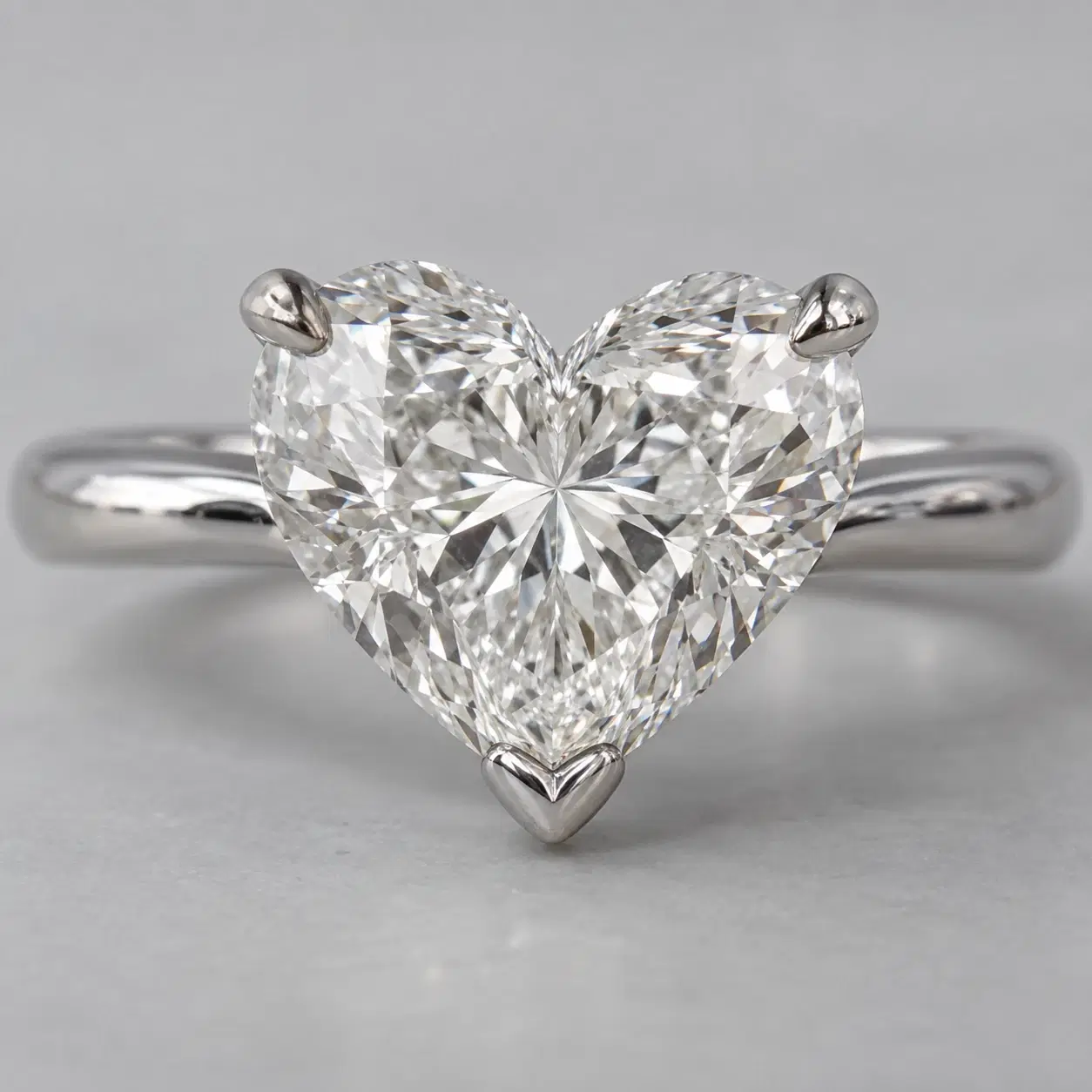
A heart-shaped diamond needs a setting that secures the stone while keeping its distinctive outline visible.
Pay particular attention to the lower point. GIA identifies this as the part of a heart-shaped diamond most vulnerable to damage and recommends a setting that shields it. GIA’s heart-shaped diamond setting advice.
The upper prongs also influence the appearance. Metal that obscures the cleft can make the heart harder to recognise. GIA recommends positioning prongs on the lobes, rather than in the cleft, to emphasise the shape. GIA’s diamond shape and setting guide.
Ask the jeweller to assess the actual diamond’s dimensions and outline before confirming the setting. In a design preview, check both the tip coverage and how much of the upper curves remains visible.
Check the report and request a specific quote
Before choosing a loose heart-shaped lab-grown diamond, review its grading report. Confirm the laboratory-grown identification, shape, measurements, carat weight, colour and clarity, along with the available finish and cut assessments.
For a stone with an IGI report, check the report number through IGI’s verification service and ask for the physical diamond to be matched to its documentation, including its inscription where present. An online report lookup verifies the record; matching the stone to that record is a separate step. IGI’s laboratory-grown diamond report information.
Our IGI-certified lab-grown diamond guide explains report considerations in more detail.
When requesting a quote, include the stock reference or report number, your preferred dimensions and the intended jewellery design. Confirm whether the quote covers the loose diamond alone or also includes the setting, applicable taxes and delivery. For broader pricing information, explore our lab-grown diamond price guide.
Frequently asked questions
Is a heart-shaped diamond the same as a heart-shaped ring?
A heart-shaped diamond is a single stone cut into a heart outline. A heart-shaped ring may instead use a heart-shaped metal setting or a cluster of smaller diamonds. Check the centre stone’s listed shape and photograph to confirm what you are choosing.
Does a heart-shaped diamond need to be at least 0.50 carat?
GIA suggests 0.50 carat or larger to help showcase the heart shape. Treat this as a visual guideline when comparing options. The actual dimensions, outline and amount of metal surrounding the stone also deserve consideration. GIA’s heart-shaped engagement ring guide.
Is a length-to-width ratio of 1.00 always best?
A ratio of 1.00 describes equal length and width. It does not tell you whether the lobes match, the cleft is well defined or the diamond returns light attractively. Use the ratio to describe the outline you prefer, then assess the individual stone.
What should I compare when choosing hearts for earrings?
Request a side-by-side comparison of the two diamonds. Look at their width, overall outline, lobe shape, cleft and visible colour. Ask for the measurements and carat weight of each stone, as the pair’s total weight does not show how closely they match.
Explore Heart-Shaped Lab-Grown Diamond Options
Ready to compare suitable stones? Contact Uniglo Diamonds with your preferred size, budget and intended jewellery design to ask about current options.
You can also browse the lab-grown diamond inventory and include any relevant stock references in your enquiry.