Emerald-Cut Lab-Grown Diamonds
Emerald-cut lab-grown diamonds appeal to buyers who appreciate geometric lines, an elongated outline and broad reflections of light. Choosing one means looking closely at the stone’s proportions, its visible clarity and the movement of its reflections.
Start with Uniglo Diamonds’ lab-grown diamond inventory, or contact our team with your preferred dimensions, quality requirements and budget.
Understanding the Step-Cut Appearance
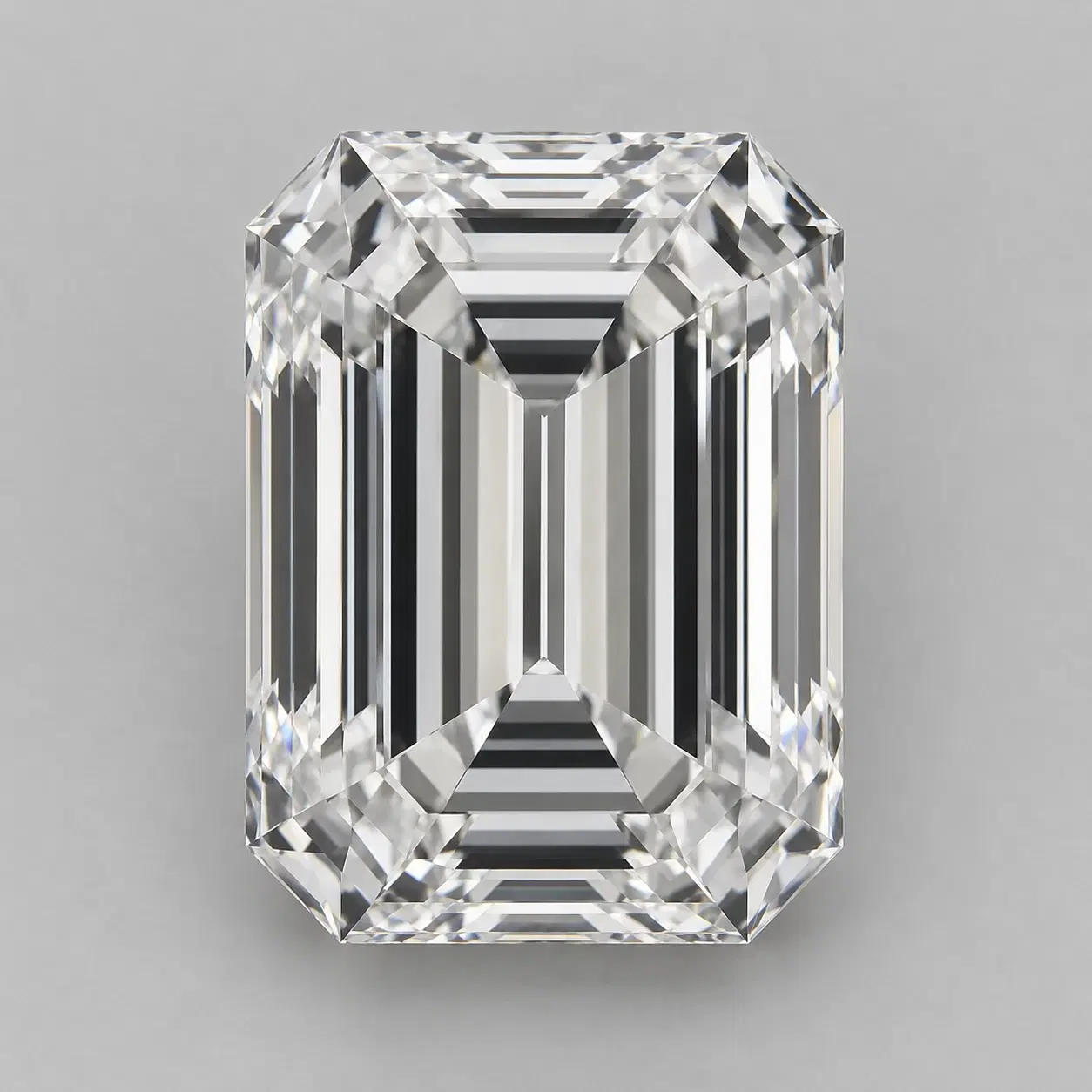
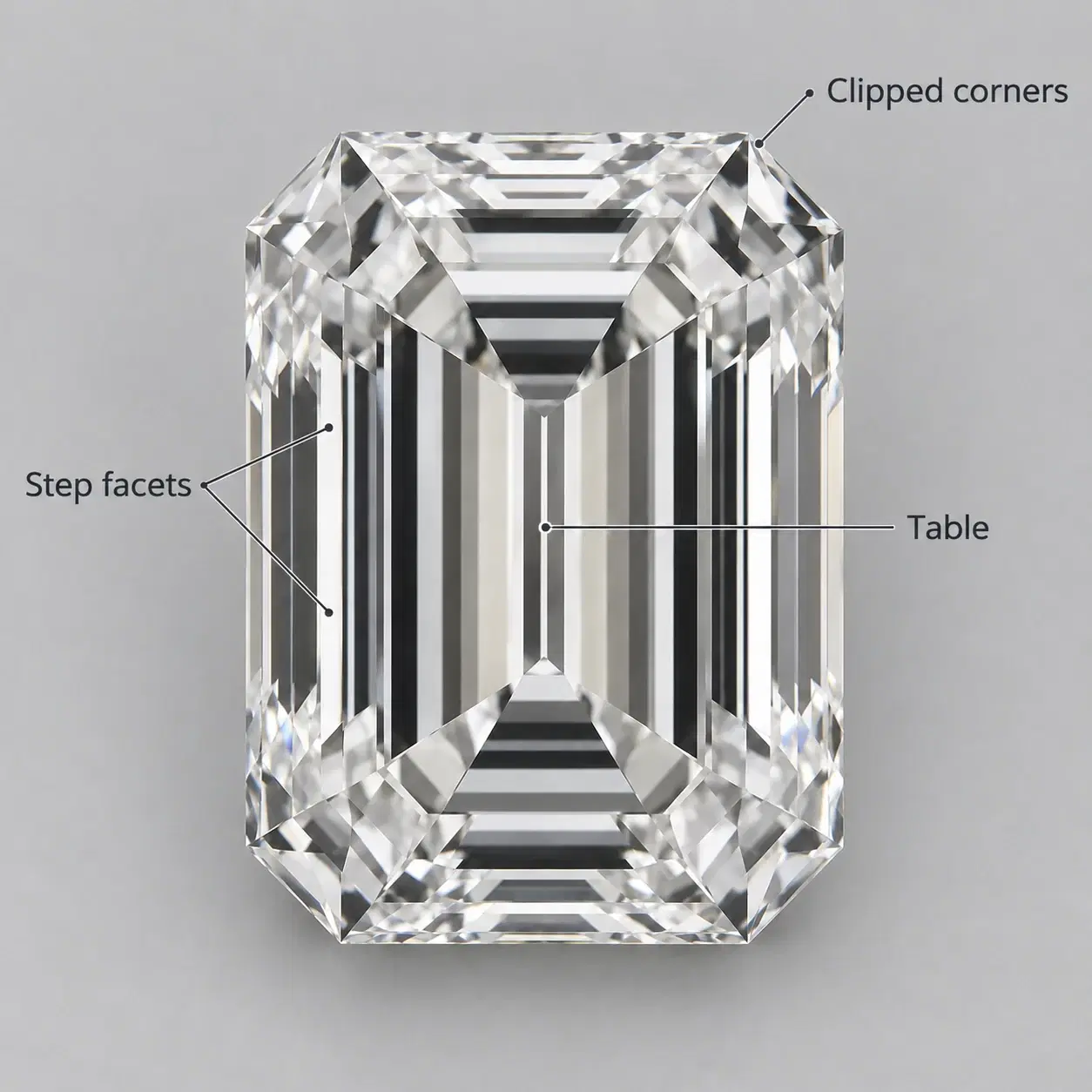
An emerald cut typically has a rectangular outline with cropped corners. Its elongated facets form stepped rows around the large central table—the flat facet on top of the diamond. IGI identifies this arrangement as a step cut. See IGI’s diamond terminology guide.
The resulting reflections are often described as a “hall of mirrors”. As the stone moves, broad areas brighten and darken, giving the diamond its distinctive visual rhythm.
When choosing an emerald-cut diamond, consider whether you enjoy this pattern. Spend time watching the actual stone move rather than judging it only by the outline in a photograph.
Give Visible Clarity Close Attention
The open appearance of an emerald cut makes careful inspection worthwhile. Look through the central table and around its surrounding facets for characteristics that draw your attention.
Inclusion position matters as well as size. GIA explains that a characteristic beneath the table can affect clarity assessment differently from one nearer the edge. Its guidance considers several factors together, including an inclusion’s location, nature and visibility. Read GIA’s explanation of diamond clarity.
Ask whether the shortlisted diamond has noticeable inclusions when viewed face-up without magnification. An enlarged video helps locate details, but it does not reproduce their appearance at normal viewing size.
Avoid choosing solely because a listing carries a particular clarity grade. Compare the report with visual evidence of the individual diamond.
Watch the Reflections Across the Whole Diamond
Request a video that shows the diamond face-up and moving through small changes in angle. Follow the reflections from the outer steps towards the centre. Consider whether the pattern looks balanced and engaging throughout the stone.
If a large area remains dark or looks unusually see-through in the face-up view, ask for closer assessment before buying. A single tilted screenshot is not enough to establish how the diamond performs.
Where possible, compare shortlisted stones under similar lighting and camera conditions. Ask for an additional view if the available footage uses intense spotlights, distracting backgrounds or constant rapid rotation. Your aim is to understand the diamond’s everyday appearance as well as its brightest flashes.
Choose the Outline and Measurements Together
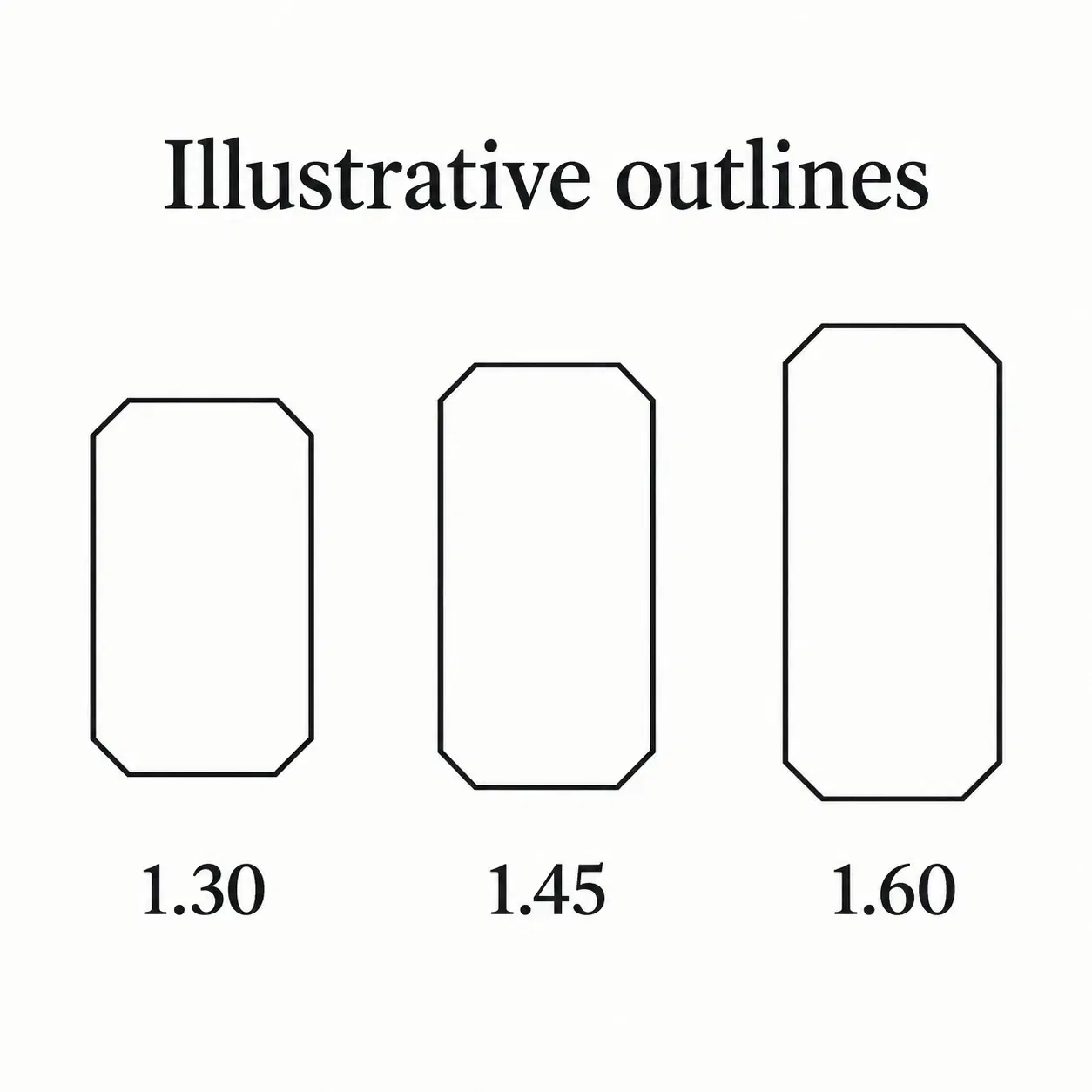
Emerald cuts range from relatively broad rectangles to longer, narrower outlines. The length-to-width ratio helps describe that difference:
Length-to-width ratio = length ÷ width
For example, a diamond measuring 9.0 mm by 6.0 mm has a ratio of 1.50. This is an illustrative calculation, not a specification for an advertised stone.
A higher ratio describes a more elongated outline. It does not automatically mean better cutting or a more attractive diamond. Decide which outline you prefer, then review its actual measurements and appearance.
Keep length and width beside carat weight when comparing options. Carat measures weight, so two emerald-cut diamonds of equal weight do not necessarily provide the same visible coverage.
Review Colour in Consistent Conditions
Once you have narrowed your choices by outline and visual clarity, compare their colour appearance under the same conditions. Different backgrounds, lighting and camera settings can make online comparisons misleading.
If you already know the intended jewellery design, include its metal colour when discussing the diamonds. Ask to see the shortlisted stones against a neutral background before considering how they might look in the finished piece.
Choose a colour preference you are comfortable with and compare the resulting quotations. This gives you a practical basis for deciding whether a higher grade is worth the additional cost for your purchase.
Check What the Laboratory Report Actually Records
Match each stock reference to its laboratory report. Confirm the laboratory-grown designation, shape and cutting style, measurements, carat weight and recorded quality assessments. Read any relevant comments and verify the report through the issuing laboratory.
Cut terminology deserves attention. IGI describes a fancy-shape assessment that considers finish, proportions, shape-specific requirements and light return. Its reports also record polish and symmetry. Check which assessment a listing’s grade refers to rather than treating every “Excellent” label as the same thing. See IGI’s laboratory-grown diamond report guidance.
Use the report to establish the documented characteristics, then compare those details with the diamond’s photographs and video. Both belong in your buying decision.
Confirm the Setting Fit Before Purchasing
For a ring or pendant, provide your jeweller with the diamond’s exact length, width and depth. The corner shape and the mounting’s design also need consideration; a setting described only by carat capacity does not establish a precise fit.
If you are replacing a stone, request a mounting assessment before purchasing. For a new design, confirm the intended orientation and how the diamond will be supported.
When ordering several emerald-cut stones for one piece, ask for them to be viewed together. Similar report grades alone do not establish that their outlines and reflection patterns will look consistent side by side.
Request Emerald-Cut Diamond Options From Uniglo
Send your budget, preferred dimensions or carat range, outline preference and any laboratory-report requirements. If you already have a setting, include its measurements or your jeweller’s specifications.
For a diamond you have found in the inventory, provide its stock reference and request confirmation of current availability, price, report and available imagery. Include your delivery destination and required date so the quotation can address your actual purchase.
Before proceeding, confirm the quoted total, what it includes and the applicable purchase terms. For broader pricing context, explore our lab-grown diamond pricing guide.
Frequently Asked Questions
Does “emerald-cut” mean the diamond is green?
No. Emerald-cut describes the cutting style and outline. It does not mean the stone is an emerald gemstone or that the diamond has a green colour.
Does a high clarity grade guarantee a bright emerald-cut diamond?
No. Clarity concerns internal and surface characteristics. The diamond’s proportions and interaction with light also affect its appearance, so assess the reflections separately.
Can table and depth percentages tell me which diamond to buy?
They provide useful proportion information, but they do not describe every facet angle or show the complete visual pattern. Use them alongside the report, measurements and an assessment of the actual diamond.
What should I specify when requesting a matching pair?
Provide the intended jewellery design, preferred length and width, acceptable size differences and quality requirements. Ask for a side-by-side comparison so you can assess the outline, colour appearance and step reflections together.
Find Your Emerald-Cut Lab-Grown Diamond
Choose an outline that suits your design, inspect the open table carefully and take time to assess the reflections.
Contact Uniglo Diamonds to discuss your requirements or request details for a shortlisted stone.