Natural Diamond Buying Guide
A natural diamond is a diamond formed through geological processes within the Earth. Its natural origin describes how it formed; its individual characteristics determine the stone you are considering. Natural and laboratory-grown diamonds have essentially the same chemical, physical and optical properties, so appearance alone cannot reliably establish origin. GIA’s explanation of natural and laboratory-grown diamonds.
Choosing a natural diamond involves bringing together several pieces of information: the laboratory report, the actual stone’s appearance, its measurements and the complete purchase quotation. A short description such as “one carat, excellent quality” leaves much of that decision unexplained.
This guide introduces the buying process and connects you with more detailed resources on quality, reports, prices and sourcing. To explore individual stones, visit our loose natural diamond inventory.
Start with the jewellery and your budget
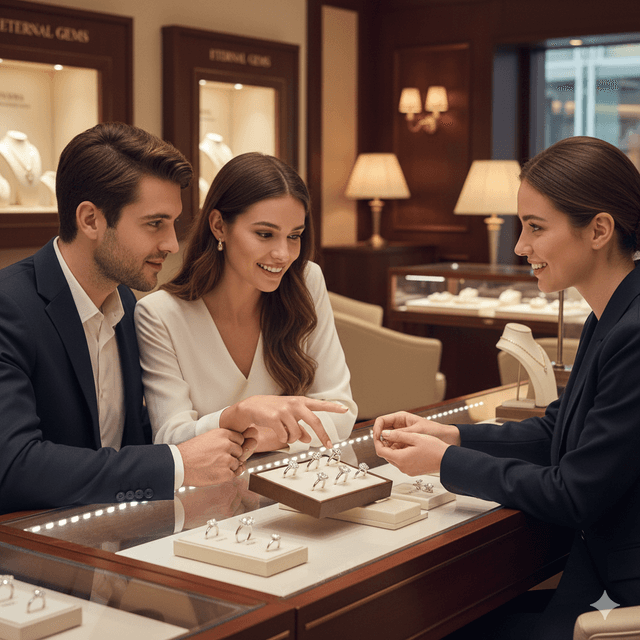
Begin with the intended jewellery piece. A centre stone for an engagement ring, a pair of diamonds for earrings and stones for a bracelet involve different selection decisions. Establish the wearer’s preferred appearance, approximate dimensions and any setting requirements before narrowing the search by grades.
For a gift, confirm whether natural origin matters to the recipient. Laboratory-grown diamonds are also diamonds, but they have a different production origin. Our lab-grown versus natural diamond comparison explores that choice in more detail.
Set a budget for the complete purchase. If you are commissioning a ring, allow for the setting, metalwork and any additional stones alongside the centre diamond. Tell the seller whether your budget includes applicable taxes, delivery and other charges so the options presented are relevant.
Use the 4Cs to compare natural diamond quality
The 4Cs provide a starting point for understanding a diamond’s assessed characteristics. They become more useful when you connect each description with the individual stone and the jewellery you intend to make.
Cut: assess how the diamond handles light
Cut concerns the diamond’s design and craftsmanship, including the arrangement and proportions of its facets. These influence its interaction with light. Shape describes its outline, such as round or oval. GIA’s diamond cut guidance.
Review the available cut assessment, proportions, polish and symmetry together. Ask to see the diamond moving under different lighting so you can assess its appearance alongside the recorded information.
Colour: compare under consistent conditions
GIA’s D-to-Z scale describes diamonds within the normal colour range, from colourless to light yellow, brown or grey. Laboratories assess colour under controlled conditions using established reference stones. GIA’s explanation of diamond colour.
When deciding what you prefer, compare shortlisted stones under similar lighting and against similar backgrounds. Consider their appearance in the intended setting. A higher colour grade may matter to your preferences, but establish what difference you can see before deciding whether to pay more.
Clarity: understand the characteristics behind the grade
Clarity grading considers inclusions and blemishes, including their size, number, nature, location and relief. GIA assesses clarity at 10× magnification, and many characteristics are difficult to see without magnification. GIA’s diamond clarity guidance.
Ask which characteristics influence the grade and whether they are visible under ordinary viewing conditions. If a seller describes a diamond as “eye-clean”, ask what viewing distance and conditions that description assumes. Our SI versus VS diamond guide examines this decision further.
Carat: check measurements alongside weight
Carat measures weight. One metric carat equals 200 milligrams, and equal carat weights do not establish identical diamond dimensions. GIA’s explanation of carat weight.
Compare the recorded length, width and depth as well as the weight. This helps you understand the diamond’s outline and whether it suits the proposed setting.
For the broader explanation of these assessments, read our diamond 4Cs guide.
Choose a shape and examine the individual outline
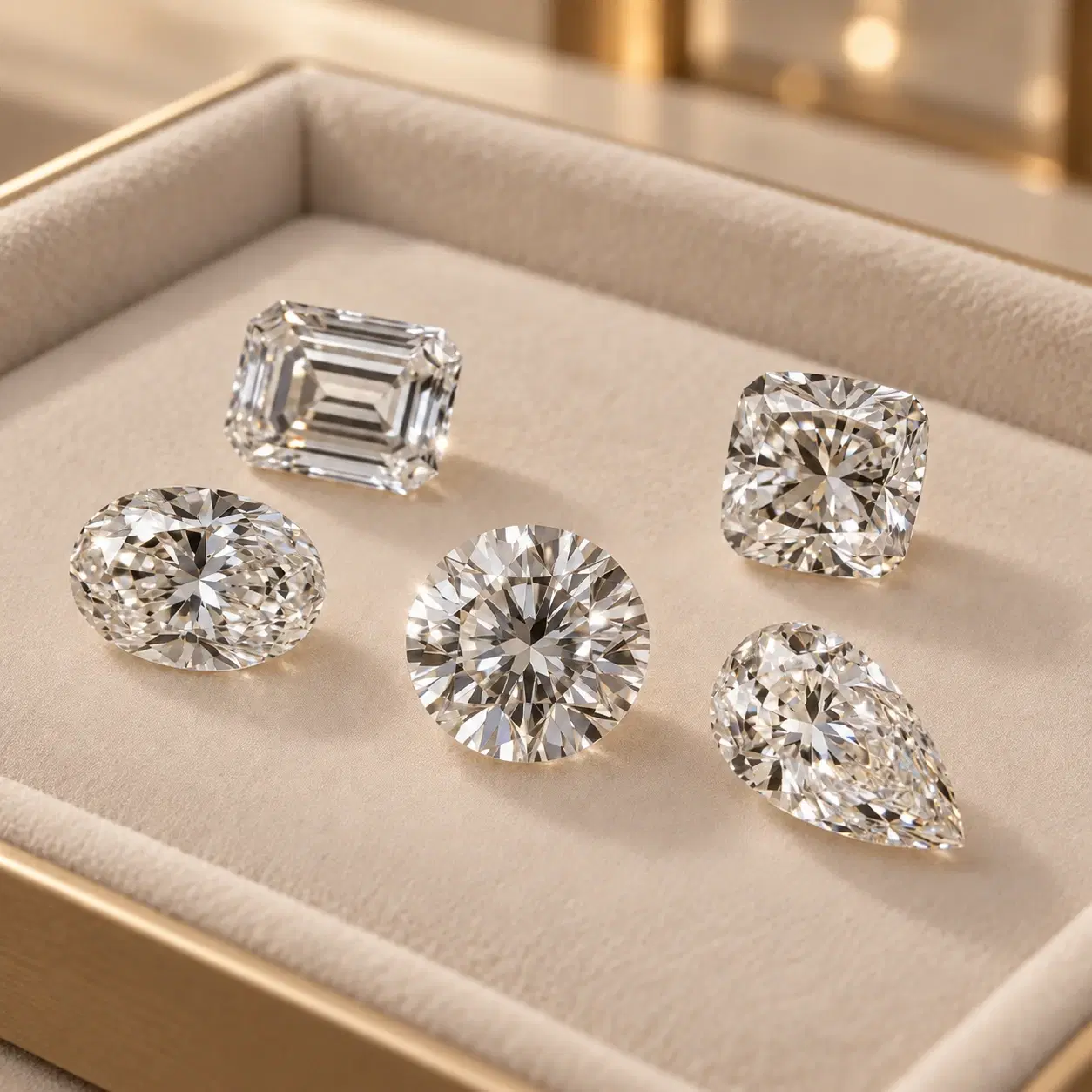
Natural and laboratory-grown diamonds can be fashioned into the same familiar shapes. Your shape preference therefore concerns the finished diamond’s appearance, while origin remains a separate purchase choice.
Within one shape, outlines and proportions can vary considerably. Two ovals may have different lengths and widths; two cushions may present different outlines and facet patterns. Compare actual stones rather than relying entirely on a shape name. GIA explains how shape, facet arrangement and proportions contribute to a diamond’s design. GIA’s shape and cut explanation.
Our diamond shape guide introduces the available outlines. If you are interested in older cutting styles, explore our old-cut diamond guide and ask about the particular stone’s cutting style and documented history.
Check the laboratory report and the diamond together
Request the complete report associated with the individual stone. Establish the laboratory, report number, service and recorded characteristics before relying on a seller’s summary.
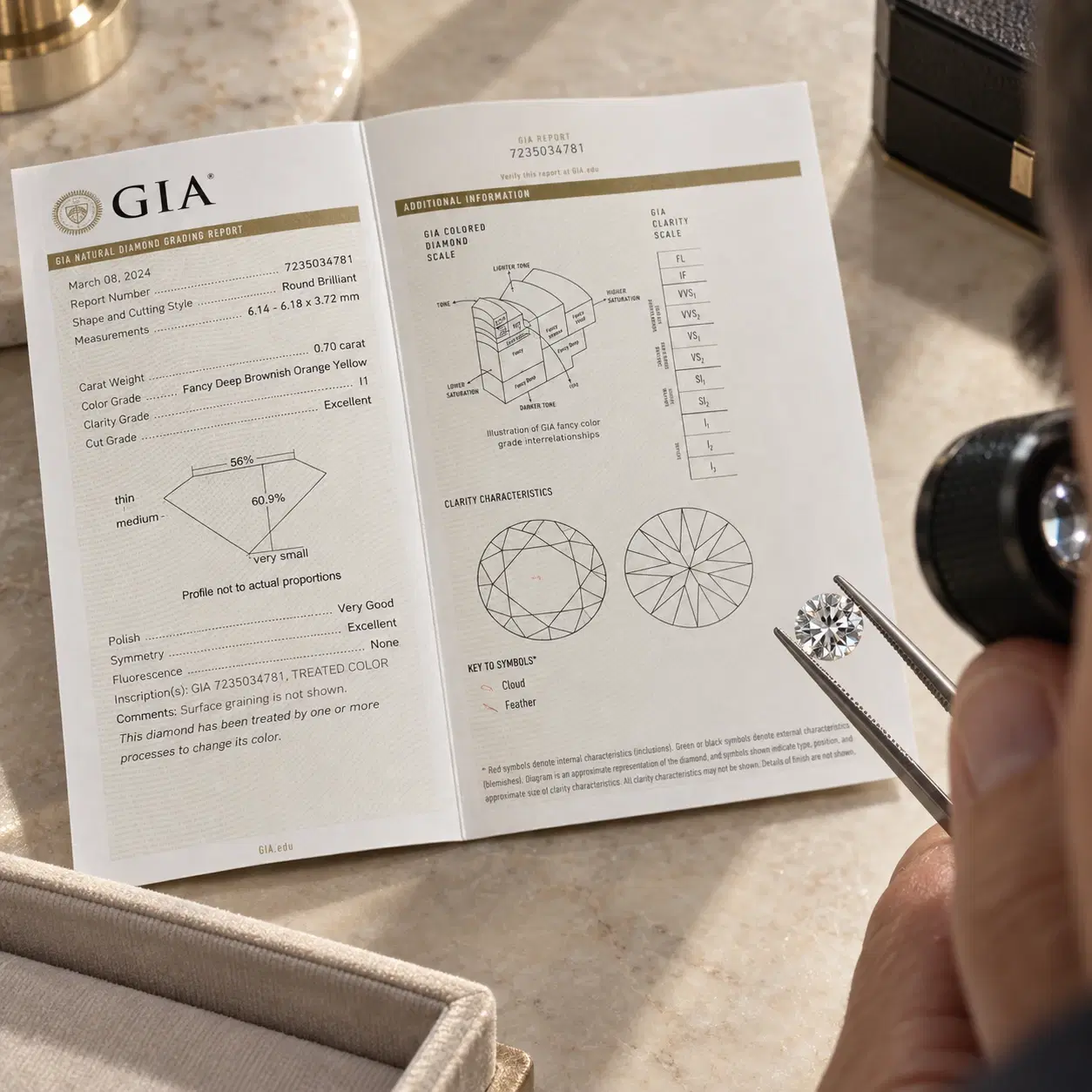
Report formats differ. For example, GIA’s Diamond Grading Report includes a plotted clarity diagram, while its Diamond Dossier provides a different format. Identify which service the diamond received and what information that document supplies. GIA’s natural diamond report services.
Where an online verification service is available, check the report reference with the issuing laboratory. GIA provides Report Check. Then ask the seller or a qualified professional to demonstrate how the physical diamond matches the report, using its recorded characteristics and any applicable inscription.
A report lookup checks the laboratory record. Matching that record to the stone being offered is another part of the purchase process.
Our diamond certificate guide explains document types, while our GIA versus IGI guide addresses comparisons between laboratory services.
Ask about treatments and fluorescence
Natural origin and treatment status describe different things. A natural diamond may have undergone treatment to alter its colour or clarity. Ask what treatments have been disclosed and how they affect the information accompanying the purchase. GIA explains both treatment methods and the limits of its reporting services for treated diamonds. GIA’s diamond treatment guidance.
For a coloured diamond, also establish whether the colour is natural or the result of treatment. This distinction is part of the information covered by appropriate coloured-diamond laboratory services. GIA’s explanation of coloured diamond reports. Our fancy coloured diamond guide provides a starting point for exploring this category.
Fluorescence is another characteristic to understand. Some diamonds emit visible light when exposed to ultraviolet light. Its recorded intensity does not, by itself, tell you whether you will prefer the stone’s appearance. Compare the actual diamond under different lighting, including daylight. GIA’s fluorescence guidance.
For a closer look at that decision, read our diamond fluorescence guide.
Compare natural diamond quotations on the same basis
A useful price comparison begins with the complete specifications of the stones being offered. Record the report reference, exact weight, measurements and assessed characteristics beside each quotation.
Next, establish what each amount covers. Check the currency, quotation date, whether the figure is per carat or for the whole stone, and which charges are included. If one offer includes finished jewellery, identify the setting and additional components before comparing it with a loose-diamond price.
Ask the seller to explain any premium in terms of the particular diamond or the services included. A higher asking price alone cannot explain which characteristics you will prefer.
For example, imagine two hypothetical oval diamonds advertised with matching carat, colour and clarity descriptions. One quotation includes a setting and delivery; the other covers only the loose stone. Their headline prices cannot answer which diamond offer is more suitable until those differences are resolved.
Buyers considering a larger centre stone can also consult our three-carat natural diamond price guide.
Review the seller, sourcing information and purchase terms
Establish who is selling the diamond, who will supply it and how its availability will be confirmed. Ask how you can inspect the stone and obtain a current quotation before committing to the purchase.
If the country where the diamond was mined matters to you, request documentation that specifically supports that information. A standard grading report and a report providing geographical origin have different scopes. GIA’s Diamond Origin Report is a separate service that includes country-of-origin information for eligible diamonds. GIA’s explanation of report types and origin information.
Review payment arrangements, delivery responsibilities, inspection opportunities and the applicable return terms. Where a seller offers buyback or upgrade arrangements, request the conditions in writing and establish whether they apply to your purchase.
Jewellers comparing supply partners can use our natural diamond supplier-selection guide. For the final purchase review, consult our diamond buying checklist.
Consider the finished jewellery and its care
The diamond and setting should be considered together. Confirm that the selected stone’s measurements suit the design and that the finished piece is comfortable and appropriate for its intended use.
Diamond is highly resistant to scratching, but it can still chip or break under an impact. Setting security and protection around vulnerable areas therefore deserve attention. Follow care instructions appropriate to the diamond, any treatments and the complete jewellery piece. GIA’s diamond care guidance.
Retain the invoice, laboratory documents and agreed purchase terms. These records help identify what was supplied and provide a useful reference for future servicing or enquiries.
Explore natural diamond buying resources
Use the resources below for decisions specific to the jewellery you are considering or the next stage of ownership.
| Your next decision | Relevant guide |
|---|---|
| Selecting a centre stone and ring setting | Natural diamond rings buying guide |
| Choosing a pair of stud earrings | Natural diamond stud earrings buying guide |
| Choosing a necklace or pendant | Natural diamond necklace buying guide |
| Comparing tennis bracelets | Natural diamond tennis bracelet buying guide |
| Understanding a possible future sale | Diamond resale value guide |
When you are ready to compare individual stones, browse our natural diamond inventory and request the documentation and current quotation for the options that interest you.
Frequently asked questions
What should I check first when buying a natural diamond?
Start with your intended jewellery piece, preferred appearance and total budget. Then request the individual stone’s specifications and laboratory report. Review its appearance and the complete quotation before making a decision.
Does a higher carat weight always mean a larger-looking diamond?
Carat describes weight. Visible dimensions also depend on the diamond’s shape and proportions. Compare millimetre measurements and actual stones to understand how much space each diamond occupies. GIA’s carat weight guidance.
Does “GIA graded” automatically mean a diamond is natural?
Read the actual document and the service named on it. GIA provides services for both natural and laboratory-grown diamonds, so the laboratory’s name alone does not establish the origin of the stone being advertised. GIA’s report and service overview.
Should I choose the highest colour and clarity grades available?
Choose grades according to your preferences and budget, then examine the individual diamond. Ask the seller to show what a higher grade changes in the options you are comparing. Decide whether that difference matters to you in the intended jewellery piece.
Can I buy a natural diamond online?
You can research and arrange a purchase online, but request the complete documentation and imagery of the actual stone. Establish the inspection and return arrangements before paying. GIA recommends reviewing individual diamond imagery and understanding the seller’s terms when buying online. GIA’s diamond buying guidance.
Should I buy a loose diamond or a finished jewellery piece?
A loose diamond lets you select the stone before finalising its setting. A finished piece lets you assess the complete design together. For either route, confirm the specifications, workmanship, total price and purchase terms.
Discuss your natural diamond requirements
To discuss a natural diamond purchase, contact Uniglo Diamonds with your preferred shape, approximate size, budget and intended jewellery piece.
Include your delivery destination and any requirements concerning laboratory documentation, treatment disclosure or sourcing information. If you have already identified a stone in the inventory, provide its reference so the discussion can focus on that particular diamond and its current quotation.