Cushion-Cut Lab-Grown Diamonds
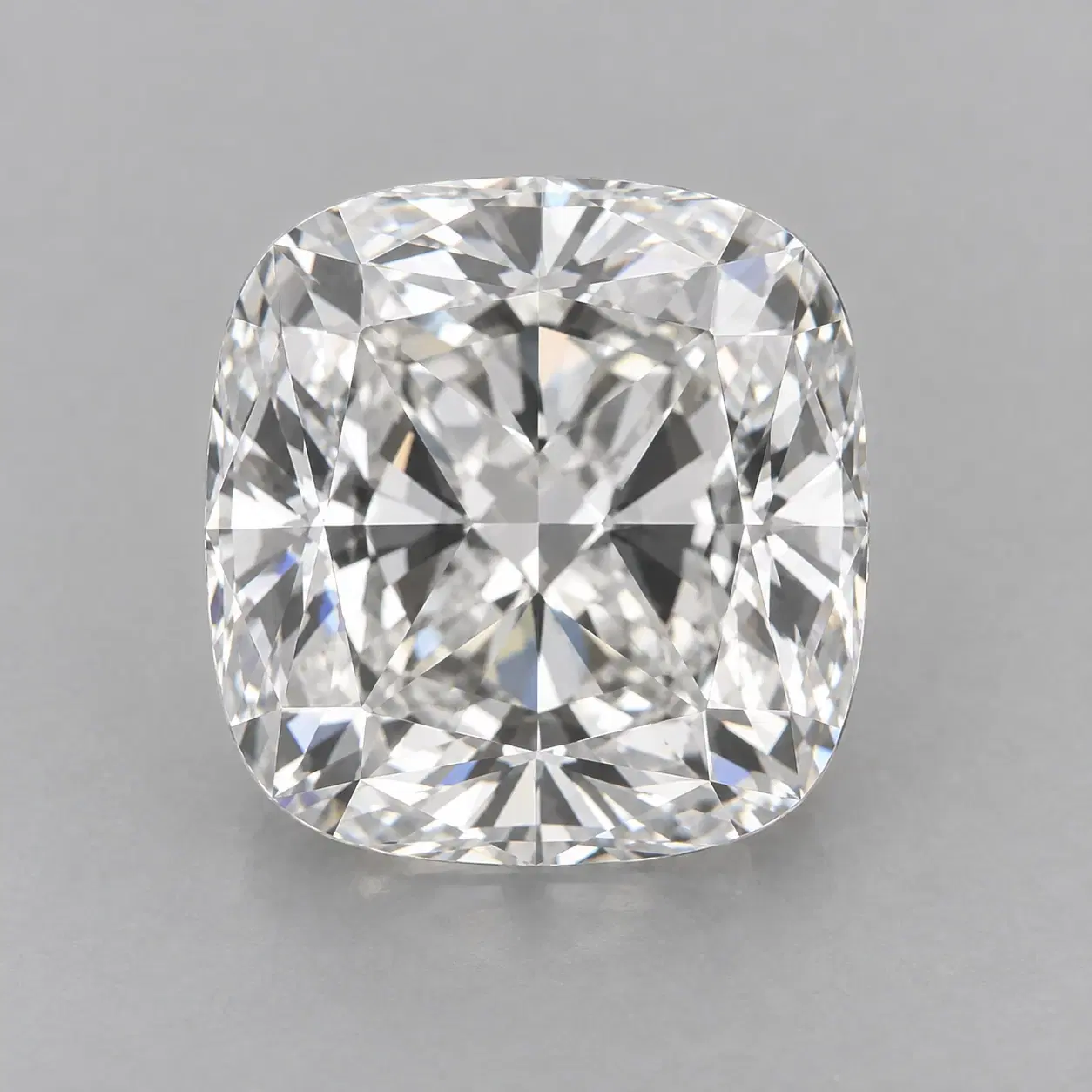
Cushion-cut lab-grown diamonds offer a softly contoured outline with curved sides and rounded corners. Some look almost square; others have a noticeably elongated shape. Their sparkle also varies, making the appearance of the individual diamond an important part of choosing one.
“Lab-grown” describes the diamond’s origin. These diamonds grow in controlled conditions and have the same carbon crystal structure as natural diamonds. Their growth history can be identified through specialist laboratory testing. GIA explains laboratory-grown diamond identity.
When choosing a cushion at Uniglo Diamonds, start with the outline and appearance you prefer, then compare the measurements, grading details and current quote for each shortlisted stone.
Square or Elongated Cushion: Which Outline Do You Prefer?
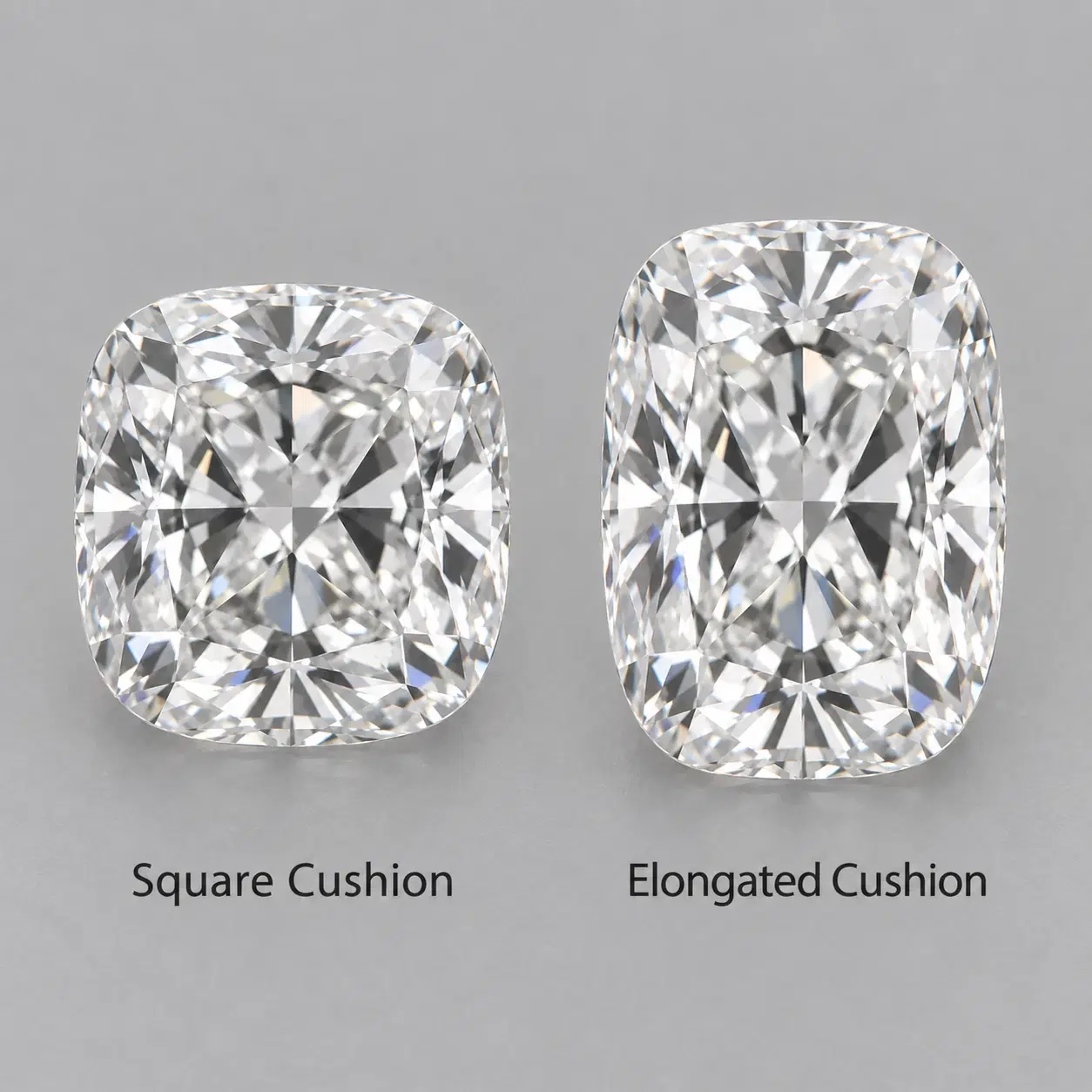
A square cushion has similar length and width, while an elongated cushion has a more rectangular outline. Both belong to the cushion family. GIA describes cushions as square or rectangular diamonds with softened contours and explains that the same general shape can have different facet arrangements. GIA’s guide to diamond shapes.
The length-to-width ratio helps describe this difference. Divide the diamond’s length by its width: a ratio of 1.00 means equal measurements, while 1.25 means the diamond is 25% longer than it is wide. The ratio describes the outline; it does not establish cut quality.
For your shortlist, compare photographs at the same scale and consider the intended jewellery design. Decide whether you prefer a compact outline or more length before narrowing the search by carat weight.
Understand the Different Cushion Sparkle Patterns
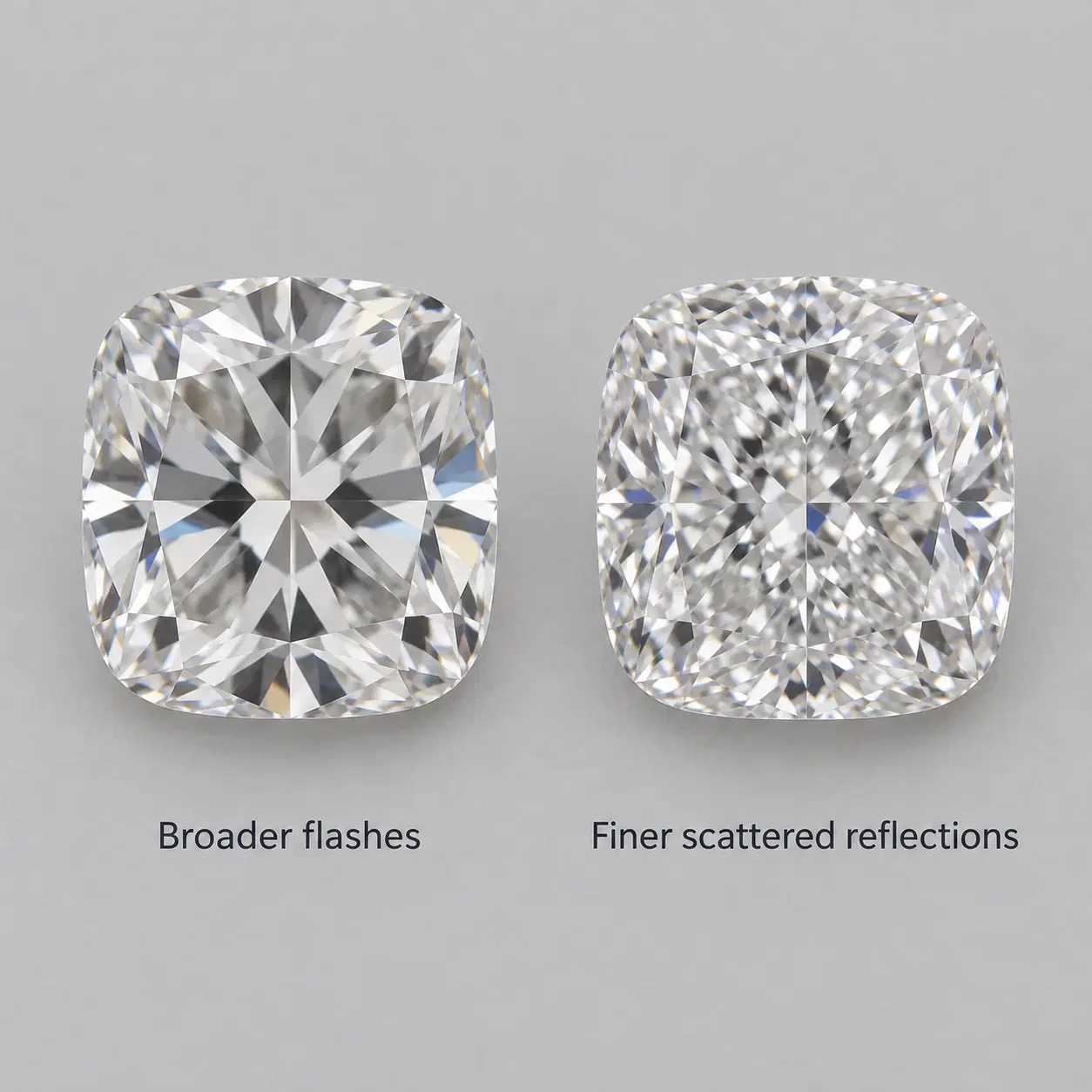
Two cushions with similar outlines can look different when they move. Some display larger, more distinct flashes, while others show a finer pattern of scattered reflections, often described as “crushed ice”.
You may encounter cutting-style descriptions such as cushion brilliant and cushion modified brilliant. GIA explains that modified cushions include additional facets on the crown or pavilion—the upper or lower part of the diamond. GIA’s cushion-cut explanation.
For selection, treat the cutting-style description as a starting point. Ask to see the actual diamond before deciding whether its sparkle suits your taste. If you prefer broad flashes or a finer pattern, share a reference image with your enquiry so that your preference is clear.
Neither appearance should be selected solely because a marketing label makes it sound superior. Compare how each stone looks in motion and under comparable lighting.
Assess Cut Quality Beyond the Numbers
A cushion’s table percentage and depth percentage can help describe its proportions, but those figures alone cannot establish how well it handles light. IGI’s fancy-shape assessment also considers finish, shape-specific craftsmanship and light return. IGI’s fancy-shape cut-grading methodology.
When comparing shortlisted diamonds, review three things together:
- Outline: Do the opposing sides and corners look balanced?
- Appearance in motion: Does the diamond remain lively as it tilts, with changing reflections across the stone?
- Report details: Is any advertised cut grade actually recorded by the laboratory, and what do the polish and symmetry assessments show?
Some contrast is part of a diamond’s appearance. If a broad area looks persistently dark or dull, ask for another view under different lighting before drawing conclusions from a single photograph. Camera position and surroundings can affect what you see.
Compare Visible Size Alongside Carat Weight
Carat measures weight, so cushions with the same carat weight do not necessarily have the same visible dimensions. Length, width and depth help explain how that weight is distributed. IGI’s explanation of carat weight and diamond proportions.
For a cushion intended as a centre stone, compare its length and width in millimetres alongside the carat figure. Ask to see shortlisted diamonds at a consistent scale. This makes it easier to judge the size difference you would actually notice in the finished piece.
Choose Colour and Clarity for the Appearance You Want
Use colour and clarity grades to narrow your options, then examine how each shortlisted cushion looks. For colour, ask for comparable views against a neutral background. Photographs taken under different lighting can make a side-by-side comparison misleading.
For clarity, consider whether inclusions are visible without magnification, where they sit and whether they affect the appearance you want. A higher clarity grade does not automatically create a more attractive pattern of sparkle. GIA explains that VS and VVS diamonds are often difficult to distinguish with the unaided eye, although individual stones still need assessment. GIA’s explanation of VS and VVS clarity.
There is no single colour-and-clarity combination that every cushion buyer must choose. Compare the actual options and decide which differences matter to you before paying for a higher grade.
Check the Report for the Specific Diamond
Request the grading report for the exact cushion you are considering. Check its laboratory-grown identification, shape and cutting style, measurements, weight and quality assessments. Where a report-number inscription is present, ask for it to be matched to the report under magnification.
IGI provides laboratory-grown diamond reports and an online report-verification facility. Its documentation also explains how laser inscriptions help connect a stone to its report. IGI laboratory-grown diamond reports.
Report formats differ between laboratories. GIA’s current service for colourless to near-colourless laboratory-grown diamonds uses an overall Premium or Standard assessment. Read the actual document rather than assuming every laboratory presents identical grading fields. GIA’s current laboratory-grown diamond services.
Compare Cushion Diamond Quotes on the Same Basis
When requesting prices, include your preferred outline, approximate dimensions or carat range, colour and clarity preferences, and budget. If a particular sparkle pattern matters to you, include that too.
Compare quotes for the specific stones being offered, with their reports and measurements available. Confirm whether the price covers the loose diamond alone and ask about any applicable delivery, tax or setting charges. Our lab-grown diamond price guide explains the broader pricing factors.
Frequently Asked Questions
Do all cushion-cut lab-grown diamonds have a crushed-ice appearance?
No. Cushion diamonds can display different reflection patterns, including broader flashes and finer, scattered sparkle. Review the actual stone in motion instead of relying on the shape name or a single product photograph.
What is the best ratio for an elongated cushion lab-grown diamond?
There is no universally best ratio. A higher length-to-width ratio describes a more elongated outline, but it does not establish brightness or overall quality. Compare several outlines and choose the proportions that suit your intended design.
Is a cushion-cut diamond the same as an old mine cut?
No. The old mine cut is a historical predecessor of the modern cushion. GIA describes old mine cuts as having features such as a higher crown, smaller table and larger culet. A modern cushion is not automatically an old mine cut. GIA’s explanation of old mine and modern cushion cuts.
Can a cushion-cut lab-grown diamond fit an existing ring setting?
Possibly, but matching carat weight is not enough. Have your jeweller check the diamond’s exact dimensions, outline, depth and girdle against the setting. Confirm compatibility before purchasing the stone, particularly when changing from a square cushion to an elongated one.
Find Your Cushion-Cut Lab-Grown Diamond
Tell Uniglo Diamonds whether you prefer a square or elongated cushion, the size you have in mind and your budget. Include a reference image if you have a particular outline or sparkle pattern in mind.
Request the available options with their measurements, grading reports and current prices so you can compare the individual stones before deciding.