Oval Lab-Grown Diamonds
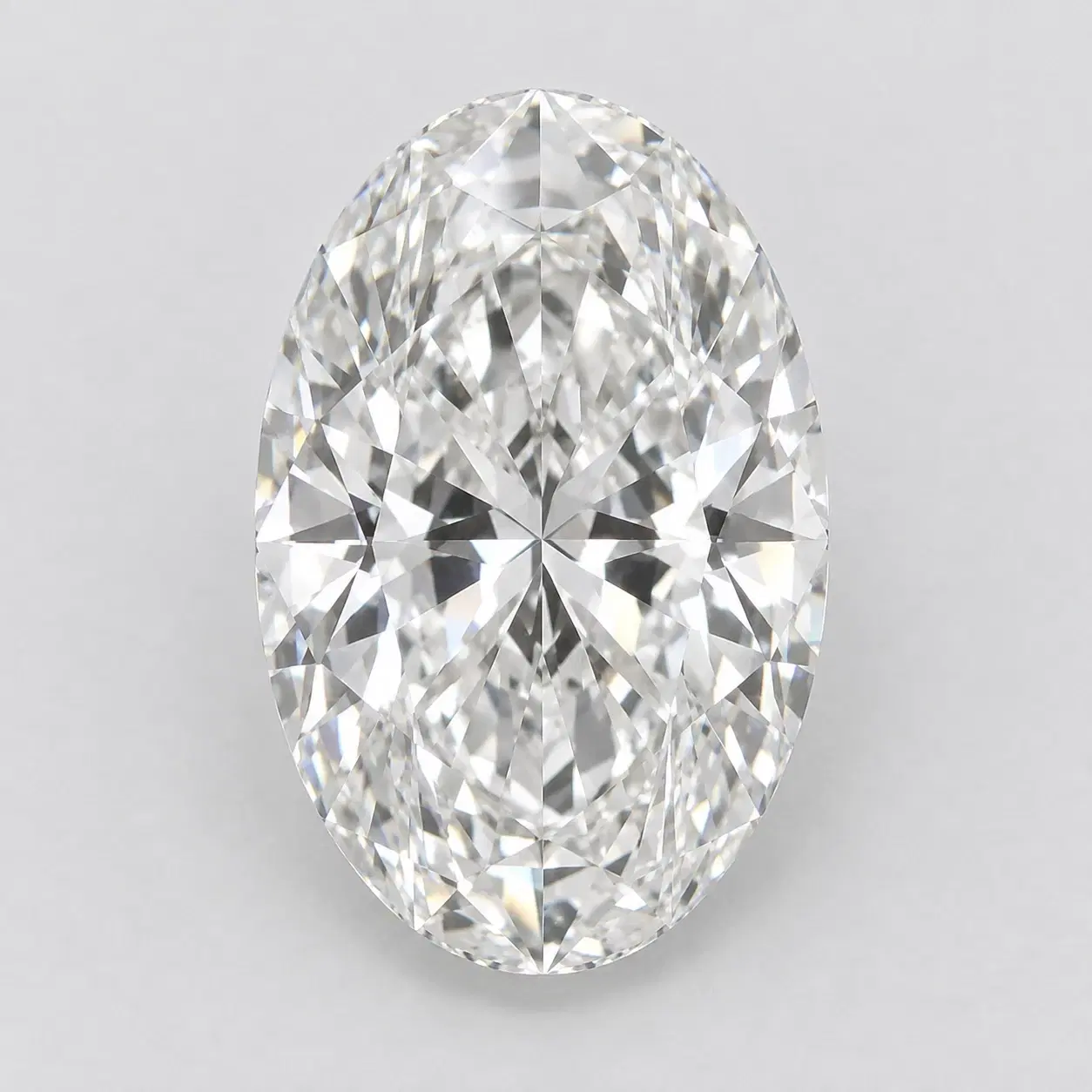
An oval lab-grown diamond combines a rounded, elongated outline with brilliant-style faceting. Choosing one starts with the shape you prefer, then moves to the details that distinguish individual diamonds: their measurements, appearance in motion and laboratory report.
Explore Uniglo Diamonds’ lab-grown diamond inventory, or request oval diamond options that match your budget and preferred specifications.
Choose the Oval Outline You Prefer
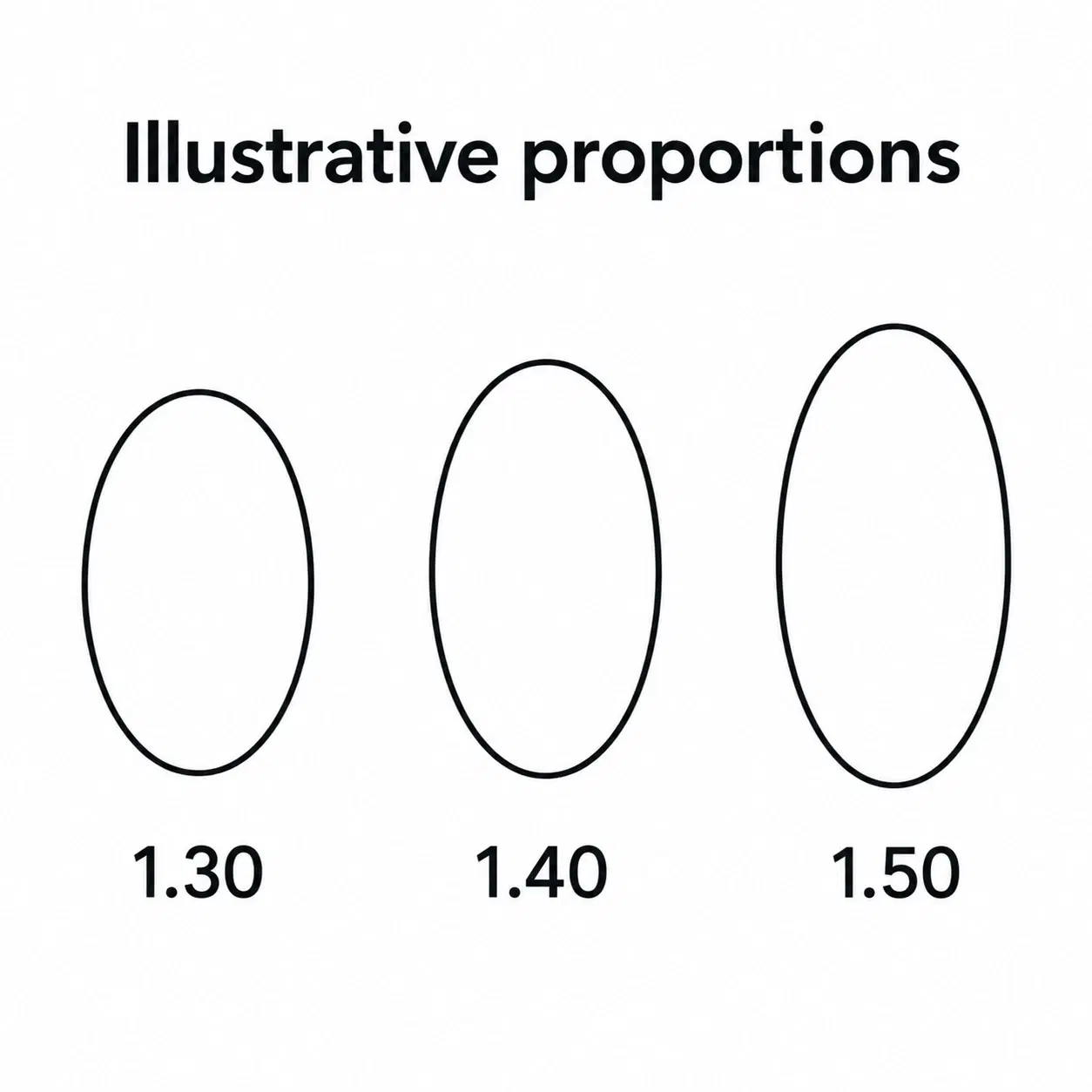
Some ovals have a broader appearance, while others look longer and narrower. Their length-to-width ratio gives you a practical way to describe that preference:
Length-to-width ratio = diamond length ÷ diamond width
For example, an oval measuring 10.5 mm long and 7.0 mm wide has a ratio of 1.50. These are illustrative measurements, not an advertised diamond.
Use the ratio to narrow your search, then inspect the actual outline. Look for balanced sides and smooth transitions around the ends. A preferred ratio describes your taste; it does not establish the diamond’s overall quality.
Compare Measurements Alongside Carat Weight
Carat weight tells you how much a diamond weighs. Its length and width tell you more about the space it will occupy when viewed from above. Two oval diamonds with the same carat weight can have different visible dimensions.
When comparing loose oval lab-grown diamonds, record the measurements beside each diamond’s price and report number. This makes it easier to distinguish a longer, narrower option from a shorter, broader one.
For a ring, consider those dimensions against the intended setting and finger size. A photograph enlarged to fill a screen can make a modest difference between diamonds appear much more dramatic than it will in person.
Check the Bow-Tie Appearance in Motion
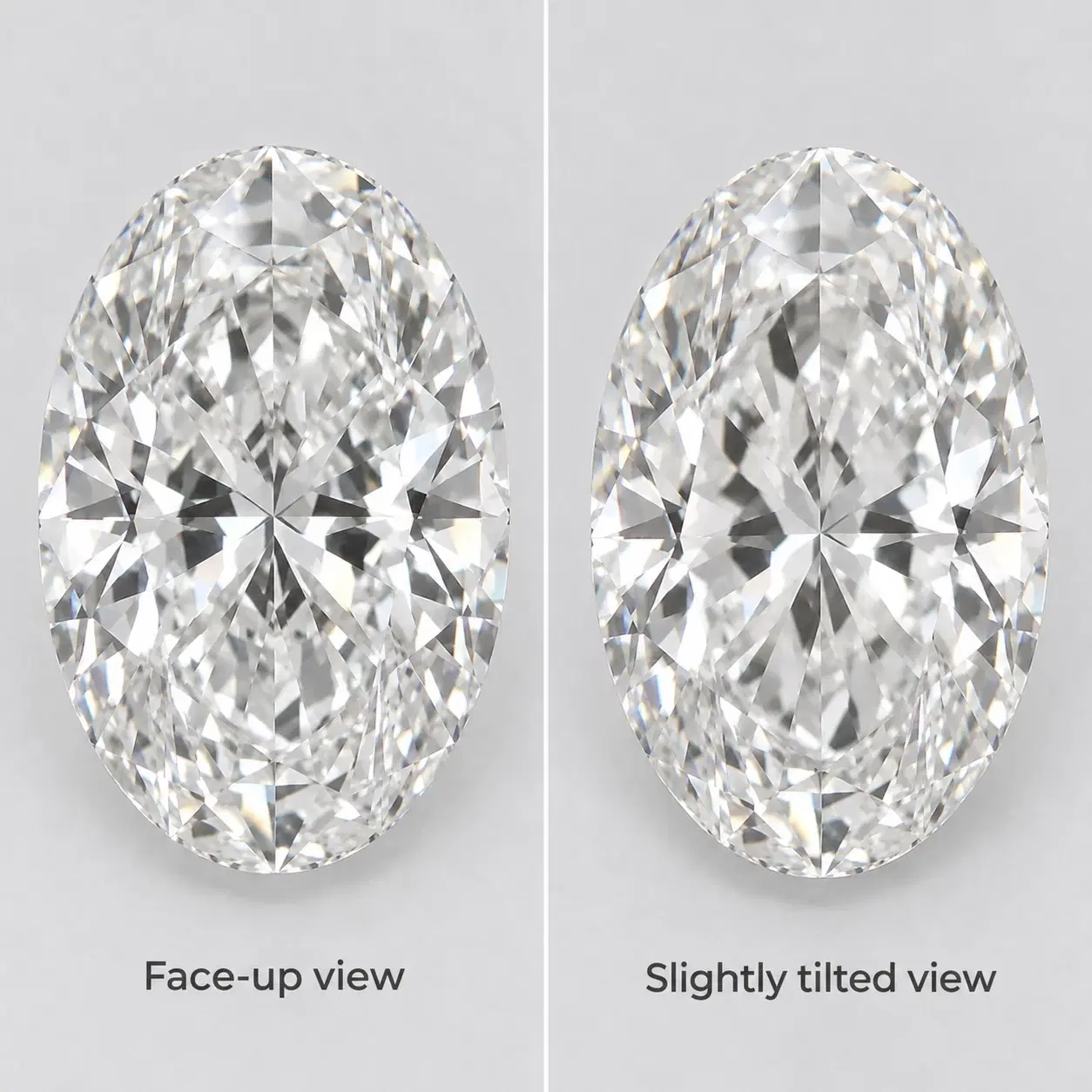
A bow tie is an area of darker contrast across an oval diamond’s centre. Its visibility can change with the lighting and viewing position. GIA explains that an observer blocking incoming light contributes to this effect. Read GIA’s explanation in its oval diamond guide.
Request a video of the actual diamond. Watch whether the centre changes between bright and dark as the stone moves, or whether a dark band remains visually dominant. Compare shortlisted diamonds under similar conditions rather than choosing from one attractive photograph.
Read the Report for the Individual Diamond
Before buying, match the diamond’s stock reference to its laboratory report. Check the stated laboratory-grown origin, shape, measurements, carat weight and the quality information recorded for that stone. Verify the report through the issuing laboratory.
Pay attention to how cut quality is described. IGI assesses fancy-shaped diamonds using finish, proportions, shape-specific requirements and light return. Its reports also record polish and symmetry. Read the actual report rather than assuming a listing’s “Excellent” label refers to an overall cut grade. See IGI’s laboratory-grown diamond report guidance.
The report and the diamond’s video answer different questions. Use the report to understand its documented characteristics and the video to judge whether its appearance suits you.
Balance Colour and Clarity With What You Can See
Compare shortlisted diamonds in consistent lighting, particularly if you are deciding whether a higher colour or clarity grade justifies the additional cost for your purchase.
For clarity, ask whether any characteristics are visible without magnification from the face-up position. A highly enlarged video is useful for inspection, but it also makes small details appear much larger than they do during ordinary wear.
If you already have a setting in mind, share its metal colour and design when requesting options. This gives the discussion a clear visual reference instead of relying entirely on grade labels.
Plan the Setting Around the Diamond’s Dimensions
An oval diamond’s length, width and depth matter when assessing whether it will fit an existing mounting. A setting described as suitable for a particular carat weight should still be checked against the exact stone.
Send the report measurements to your jeweller before committing to the diamond. If you are planning a new design, also confirm whether the oval will sit lengthwise along the finger or across it in an east–west orientation.
For earrings or another design requiring multiple stones, specify that you need a visually matched selection. Include your preferences for dimensions, outline and appearance, as well as carat weight.
Request a Quote for Loose Oval Lab-Grown Diamonds
A useful quote starts with a clear brief. Share your approximate budget, preferred carat weight or dimensions, outline preference and any requirements for the laboratory report. Include your delivery destination and required date.
If you have already found a diamond in the inventory, send its stock reference. Ask for confirmation of availability, the current price, its report and any available video before proceeding.
For multiple options, compare the complete specifications beside the quoted totals. Confirm what each quote includes, including any applicable delivery charges and taxes. You can also explore our lab-grown diamond pricing guide for broader purchasing context.
Frequently Asked Questions
Do oval lab-grown diamonds all have the same proportions?
No. Ovals vary in length, width, depth and outline. Even diamonds with the same carat weight or length-to-width ratio can look different, so compare their actual measurements and images.
Does a higher clarity grade remove the bow-tie effect?
No. Clarity describes internal and surface characteristics. A bow tie relates to the diamond’s interaction with light and the viewing conditions. Assess the centre visually when comparing stones.
Can I choose the diamond before choosing a ring setting?
Yes. Selecting the loose diamond first gives your jeweller exact measurements to work with. Confirm the mounting’s suitability before it is made or adjusted.
What if I cannot find an oval matching my requirements?
Send your specifications and identify which details are flexible. For example, you might prioritise a particular width or outline while allowing a range of carat weights. Ask Uniglo Diamonds to confirm what options are currently available.
Find Your Oval Lab-Grown Diamond
Bring together the outline you prefer, the measurements your design needs and a diamond you enjoy viewing in motion.
Contact Uniglo Diamonds with your requirements or a shortlisted stock reference to request current details and a quote.