Radiant-Cut Lab-Grown Diamonds
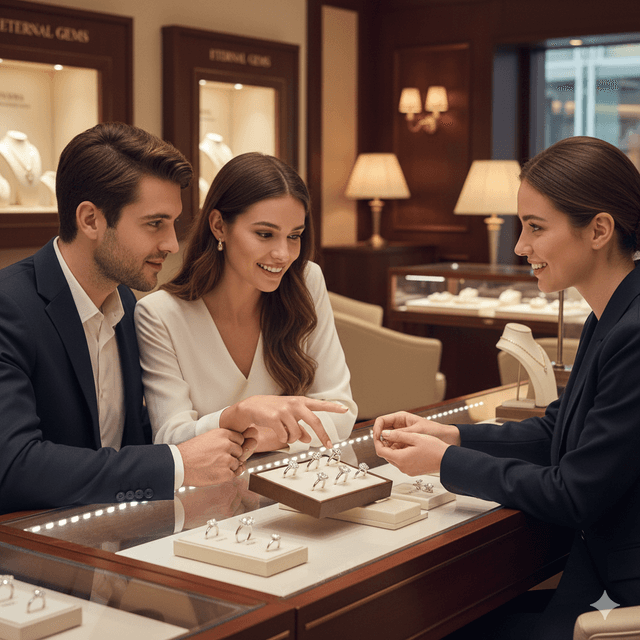
Radiant-cut lab-grown diamonds combine a square or rectangular outline, cropped corners and brilliant-style faceting. They offer a geometric shape with an active pattern of reflections, making the appearance of each individual stone an important part of the buying decision.
Explore Uniglo Diamonds’ lab-grown diamond inventory, or request radiant-cut diamond options with your preferred outline, dimensions and budget.
Start With Your Preferred Outline
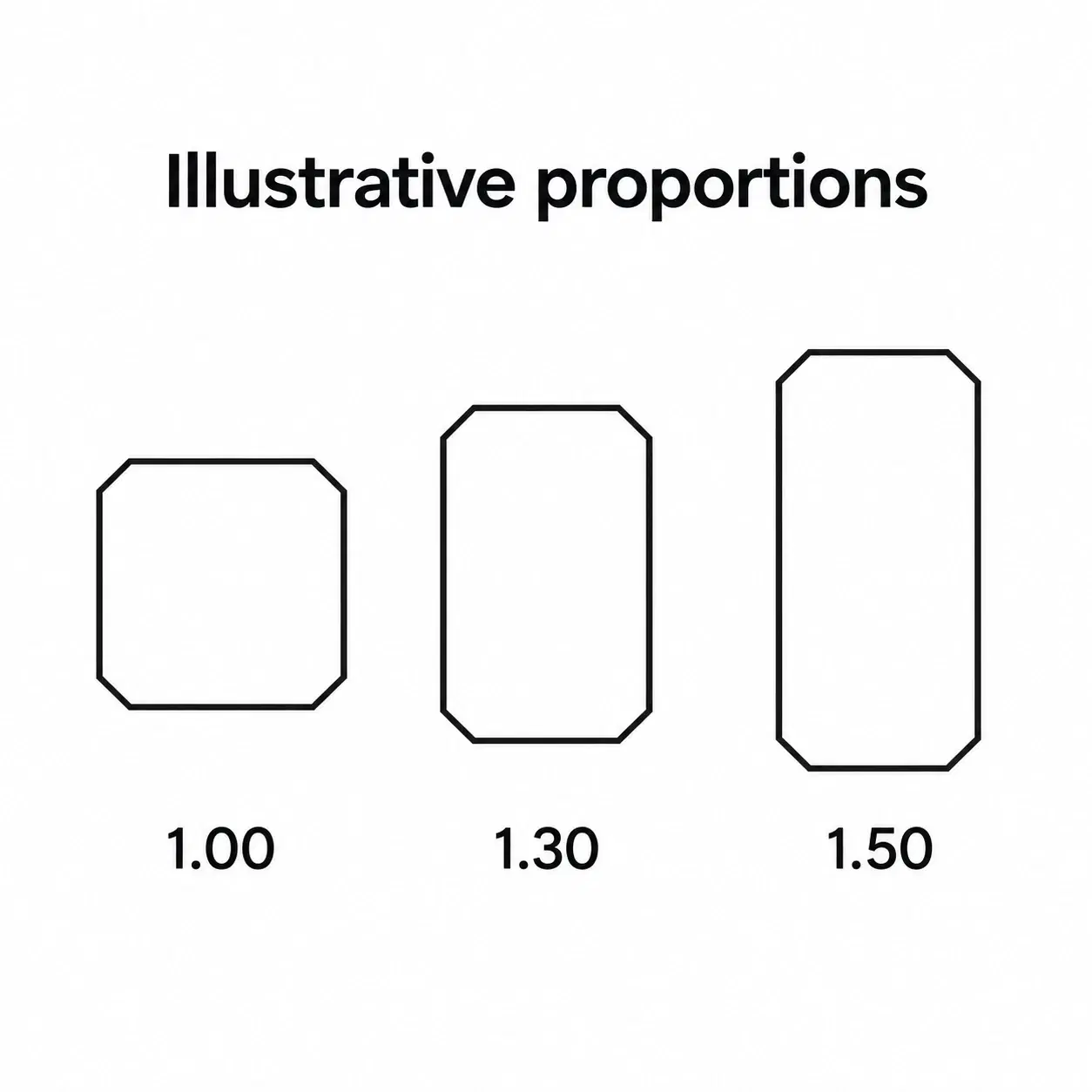
A nearly square radiant creates a compact geometric appearance. A rectangular radiant gives the design a longer outline. Both belong within the radiant shape family.
Length-to-width ratio describes this proportion: divide the diamond’s length by its width. A ratio near 1.00 indicates similar length and width; higher values describe increasingly elongated outlines. IGI explains that a preferred ratio is a matter of taste rather than a universal ideal. See IGI’s explanation of diamond proportions.
When making an enquiry, describe the outline you want alongside your carat range. “A rectangular radiant with a broader appearance” gives a more useful starting point than carat weight alone.
Compare the Sparkle Pattern in Actual Videos
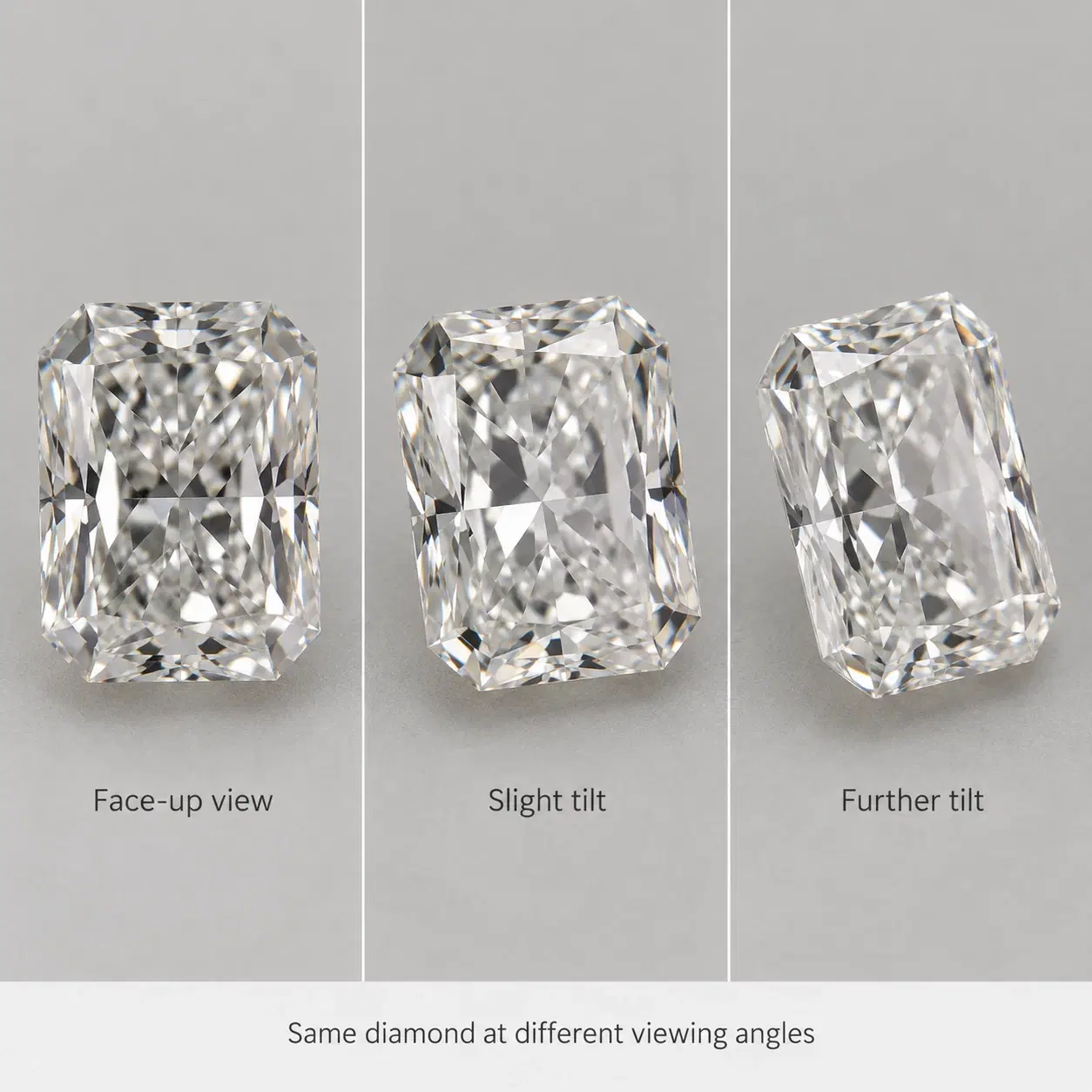
Two radiant diamonds can present different arrangements of reflections. When reviewing a shortlist, notice whether you prefer more distinct flashes or a finer, busier pattern across the stone.
GIA explains that a diamond’s visual pattern comes from the arrangement and contrast of bright and dark reflections. Facet angles and proportions influence how light returns to the viewer. Read GIA’s explanation of diamond light performance.
Request footage of the actual diamond moving slowly through several viewing positions. Watch the centre and the areas towards the corners, rather than concentrating only on the brightest moment.
If a dark area dominates the centre through several small changes in angle, ask for additional footage or an assessment. Compare diamonds using similar backgrounds, lighting and magnification so differences in photography do not determine your choice.
Build Your Shortlist Around Actual Measurements
Record each diamond’s length, width and depth beside its stock reference. These measurements help you understand its physical presence and whether it suits your intended jewellery design.
Carat weight measures mass. It does not establish a fixed length or width, so a heavier radiant is not automatically wider than another stone on your shortlist.
If width matters most for your design, make that a priority in your enquiry. If you prefer a longer outline, specify that instead. This gives you a clearer way to compare alternatives when the exact combination of size, quality and budget is unavailable.
For an existing mounting, ask your jeweller to confirm the acceptable dimensions before committing to a diamond.
Assess Colour and Clarity Without Relying on Labels Alone
Use the recorded colour and clarity assessments to organise your options, then examine the individual stones. For colour comparisons, request a neutral background and consistent lighting, particularly when the available images come from different photography setups.
For clarity, ask whether any characteristics are noticeable from the face-up position without magnification. Do not assume that brilliant-style faceting makes every inclusion invisible.
If a magnified video reveals a feature, ask where it sits and how it appears at ordinary viewing distance. This helps you decide whether a higher clarity grade would make a meaningful difference to your purchase.
Share the intended metal colour and jewellery design when discussing your shortlist. They provide useful context for the appearance you want to achieve.
Understand the Report’s Cut Information
Check the laboratory-grown designation, shape description, measurements and quality assessments against the diamond’s listing. Confirm that the stock reference, imagery and report all relate to the same stone, then verify the report through its issuing laboratory.
Read polish, symmetry and any overall cut assessment separately. A listing should make clear which characteristic an “Excellent” description refers to.
IGI describes a fancy-shape cut assessment that considers finish, proportions, shape-specific requirements and light return. This is why the actual report matters when comparing radiant-cut diamonds. See IGI’s laboratory-grown diamond report guidance.
If a listing uses a term such as “Ideal”, ask whether it comes from the laboratory report or the seller’s own selection criteria.
Confirm the Mounting and Corner Fit
A radiant’s cropped corners are part of its outline, and the mounting should accommodate the particular stone. Give your jeweller its complete measurements and clear images before a setting is ordered or adjusted.
For an existing ring, ask whether the current mounting can support that diamond securely. For a new design, confirm the intended orientation and how the setting will sit around its corners and edges.
If the design includes side stones, request an overall comparison before finalising the selection. The centre diamond and accompanying stones should work together in proportion and appearance.
Request a Quote for Loose Radiant-Cut Lab-Grown Diamonds
Send Uniglo Diamonds your preferred outline, approximate dimensions or carat range, budget and any laboratory-report requirements. Include a stock reference if you have already identified a diamond.
Ask for confirmation of current availability, the report and any available photographs or video. Specify whether your request is for a loose diamond or a finished jewellery project so the quotation covers the correct components.
For several shortlisted stones, compare the quoted amounts alongside their measurements and documented characteristics. Confirm the currency, any applicable taxes, delivery charges and purchase terms before proceeding. Our lab-grown diamond pricing guide provides broader context for these comparisons.
If one option exceeds your budget, identify which preferences are flexible. A different outline or size may be a more useful alternative than changing several quality requirements at once.
Frequently Asked Questions
Is there one best ratio for a radiant-cut lab-grown diamond?
No. The ratio describes the outline. Choose the proportions you prefer, then assess the diamond’s dimensions, reflections and suitability for your design.
Can I select a radiant diamond using table and depth percentages alone?
No. Those figures describe part of the diamond’s proportions, but they do not show its complete facet arrangement or appearance in motion. Review the actual stone and its report together.
Does brilliant-style faceting guarantee an eye-clean diamond?
No. Ask for an assessment of the individual diamond without magnification. A clarity grade and an enlarged image each provide useful information, but neither should be treated as a blanket promise about what you will see.
Can I request a loose radiant diamond before choosing a setting?
Yes. Make clear that your enquiry is for the loose stone. Once selected, its exact measurements can guide the choice or construction of a suitable mounting.
Find Your Radiant-Cut Lab-Grown Diamond
Choose the outline you enjoy, compare actual diamonds in motion and bring their specifications together before deciding.
Contact Uniglo Diamonds to request current options or a quote for a shortlisted radiant-cut diamond.