Banner

The Inescapable Charm of Antique Cut Diamonds

Today, when it comes to diamonds, everyone knows all about its many different shapes and sizes. From marquise cut diamonds to heart cut ones, there's enough and more for you to choose from. But apart from the more contemporary forms, there also exist a variety of cuts that can only be classified as "vintage" or "antique" cuts. In today's world, these kinds of diamonds are becoming increasingly popular, too!

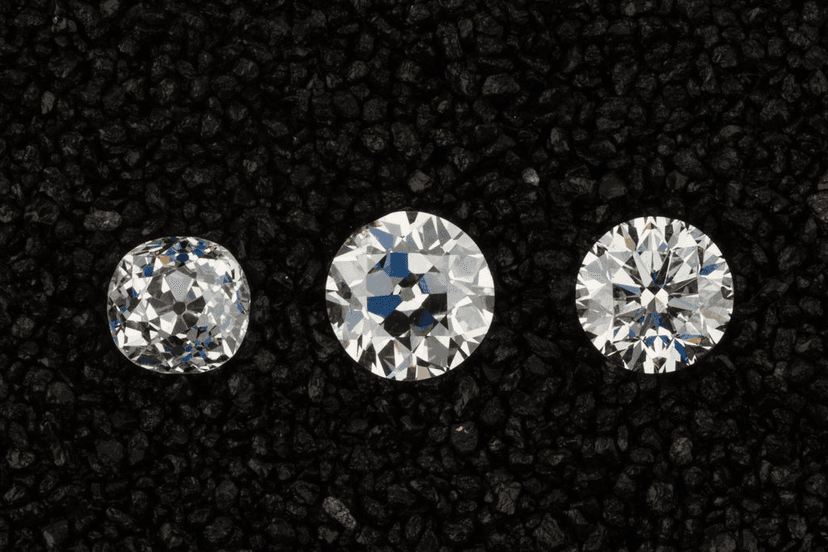
Years and years ago, diamond cutters employed methods that are far more different from the ones used today, to give diamonds their shape. The use of these age-old cutting meant that these stones could more fire and have. It was this magnificent glow that people grew to love. Such antique cut diamonds gave off an air of romance and seemed to be steeped in an old-world charm. With time, diamond cutters have begun to go back to these ancient techniques. In today's times, these antique cuts are highly in vogue, coveted by people the world over. They can be summed up as symbols of luxury and what's better, they even have good returns.

There are five different cuts that you will find today. They are:

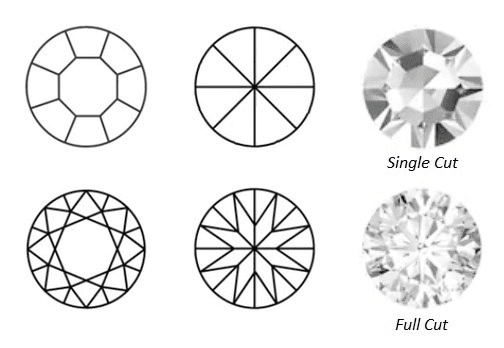
Antique Diamond Cuts Diagram

Welcome

The Single Cut

The history of single cut diamonds can be traced back to the 1300s. Diamonds that are cut using this method tend to have large tables and octagonal girdles and generally have 18 facets. The bottom edge of the diamond, which is known as the culet, can either be pointed or even flat.

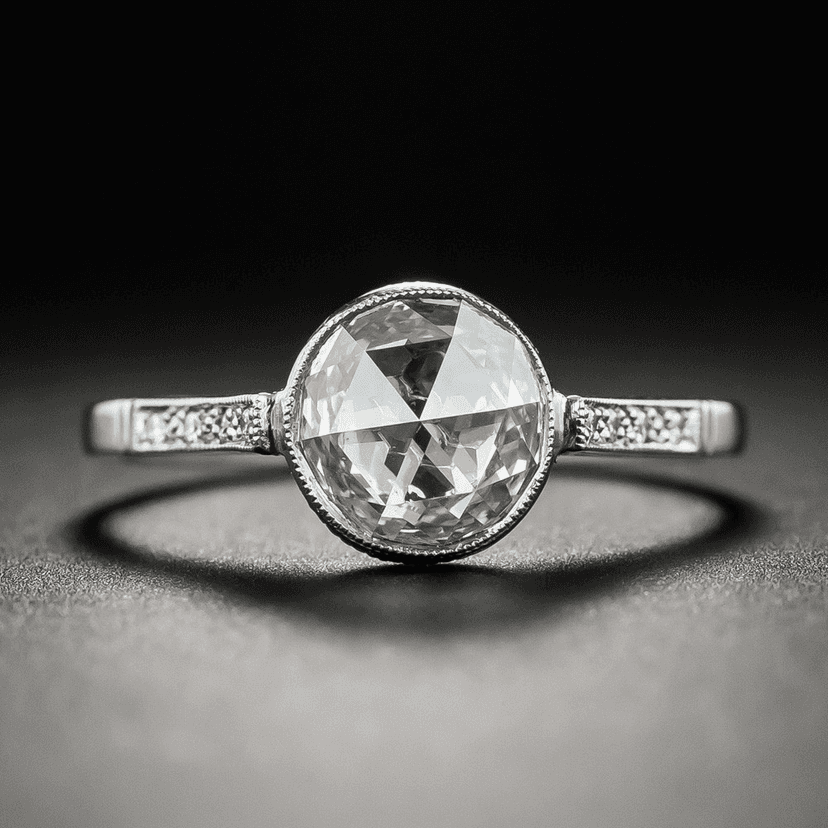
Rose Cut Diamond

Welcome

The Rose Cut

As its name suggests, rose cut diamonds resemble the shape of a rose bud. They can look anything from three to 24 facets and are diamonds that are enjoying some space in the spotlight again, especially when it comes to bridal jewels.

Such diamonds have a dome-shaped top, while the bottom is flat. Interestingly enough, this diamond cut can be traced back to the Victorian and Georgian eras.

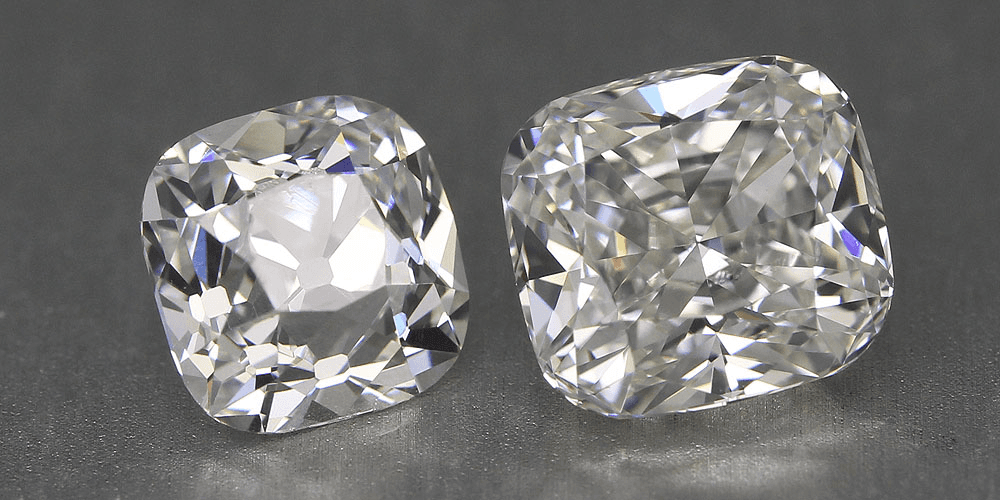
The old Mine Cut

Often, these cuts are said to be similar to today’s cushion cuts. Think gently rounded corners and a nearly square-shaped girdle. They feature a high crown, a small table and a culet that is flat but large. This cut too, can be traced back to the Georgian and Victoria age, going as far back as the 1700s.

The Old European Cut

welcome

The Old European Cut

From the 1800s to the 1930s, these cuts were handcrafted with precision. Those that were cut before the 1880s were termed the 'old mine cuts', while those created after 1935 were called 'modern round brilliant diamonds'.

These diamonds feature as many as 58 facets. They also have a high crown, small table and a large but flat culet.

Modern Round Brilliant Cut

Welcome

The Modern Round Brilliant Cut

Think of this method as the most popular one when it comes to cutting diamonds. Why? Because these cuts have an innate ability to maximize fire and brilliance! During the beginnings of the 19th century, techniques to open to the idea of trying out new techniques. As a result of their efforts, in 1919, the round brilliant 'was born. It actually rose up in popularity during the liberty and the art deco eras. When it comes to other shapes and their composition, round brilliant cuts are similar to the old European cut. In that they also have a circular girdle and 58 facets. But, these diamonds cuts come without cutlets.

With the passage of time, antique cut diamonds have become the go-to choice for even the most discerning buyers and jewelers. Their larger faceting and beautiful glow are what make them truly timeless. Better still, antique or vintage cuts are warmer in colour and environmentally conscious, making them a preferred choice for the eco-friendly buyer.