Pear-Shaped Lab-Grown Diamonds
Pear-shaped lab-grown diamonds are laboratory-created diamonds with a teardrop outline: one rounded end tapering towards a single point. Their proportions can create a fuller, rounded appearance or a longer, more slender shape.
Choosing a pear involves more than deciding how much length you want. The balance of its two sides, the brightness across its centre and the protection of its tip all deserve attention. These details help distinguish stones that may initially look similar in an inventory listing.
At Uniglo Diamonds, begin your enquiry with the outline you prefer, your budget and the jewellery you have in mind. Then compare the individual diamonds offered, using their photographs, measurements and grading reports.
Start With a Balanced Outline
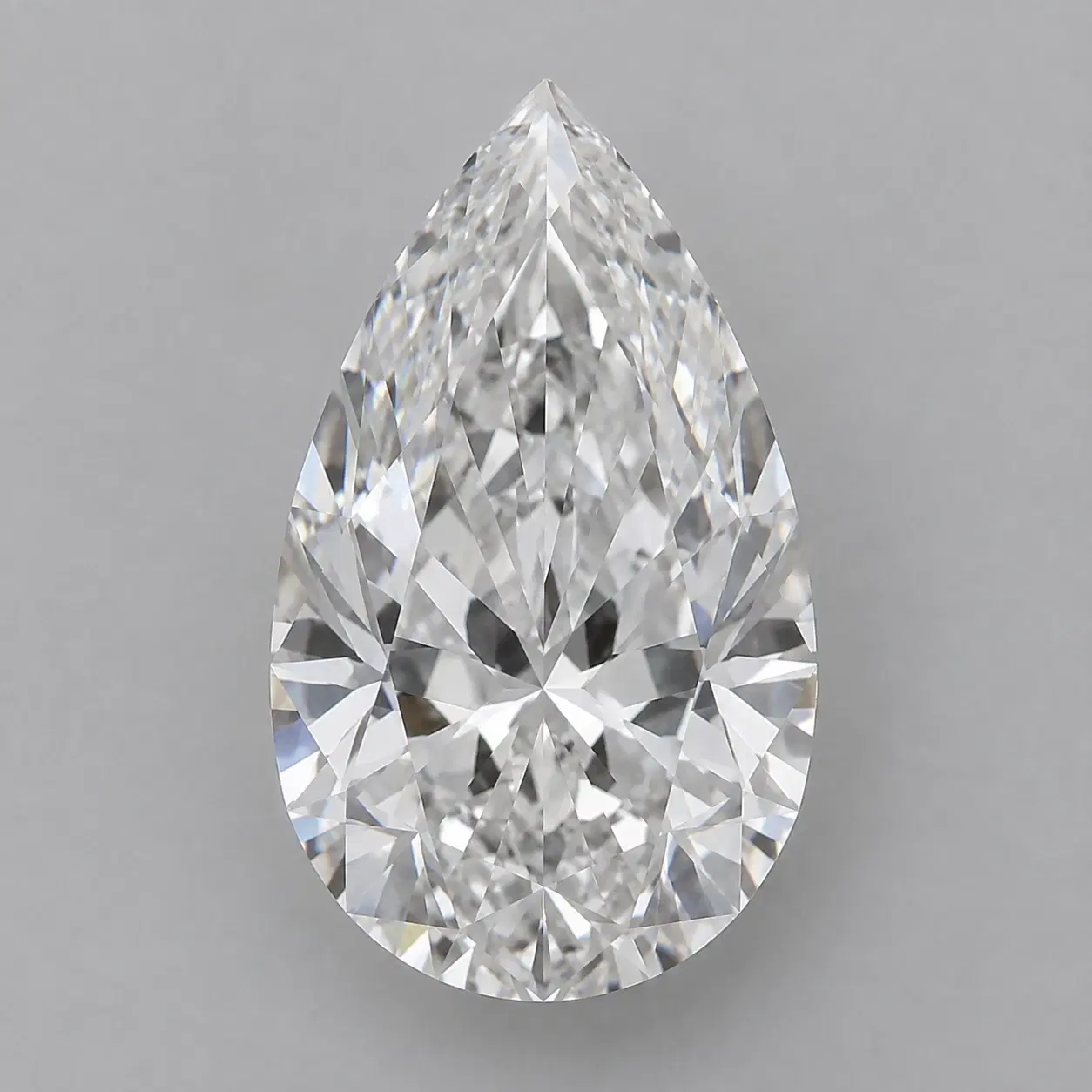
Position the diamond with its point at the top and compare the left and right sides. Look for a centred tip, similar curves on both sides and a smooth transition from the rounded end towards the point.
GIA identifies outline symmetry as an important consideration for pear diamonds, including the balance of their shoulders and tapering sides. GIA’s pear-shaped diamond guide.
Make this visual check before narrowing your options by grades alone. If one side looks fuller or flatter than the other, request a straight-on photograph to establish whether you are seeing the diamond’s outline or the effect of the camera angle.
Choose Length and Width Together
The length-to-width ratio describes how elongated a pear appears. It is calculated by dividing length by width. A ratio of 1.60, for example, means the diamond is 60% longer than it is wide.
Treat that figure as a description of shape rather than a quality score. Two pears with similar ratios can still have different contours, so compare their actual photographs as well as the measurements.
Carat weight also needs context: it measures weight, while the length, width and depth describe physical dimensions. Diamonds of the same carat weight can differ in visible size. IGI’s explanation of diamond weight and dimensions.
When requesting options, mention whether you prefer a broader pear or a slender one. If a setting has already been designed, share its required dimensions with the enquiry.
Assess the Bow-Tie Across the Centre
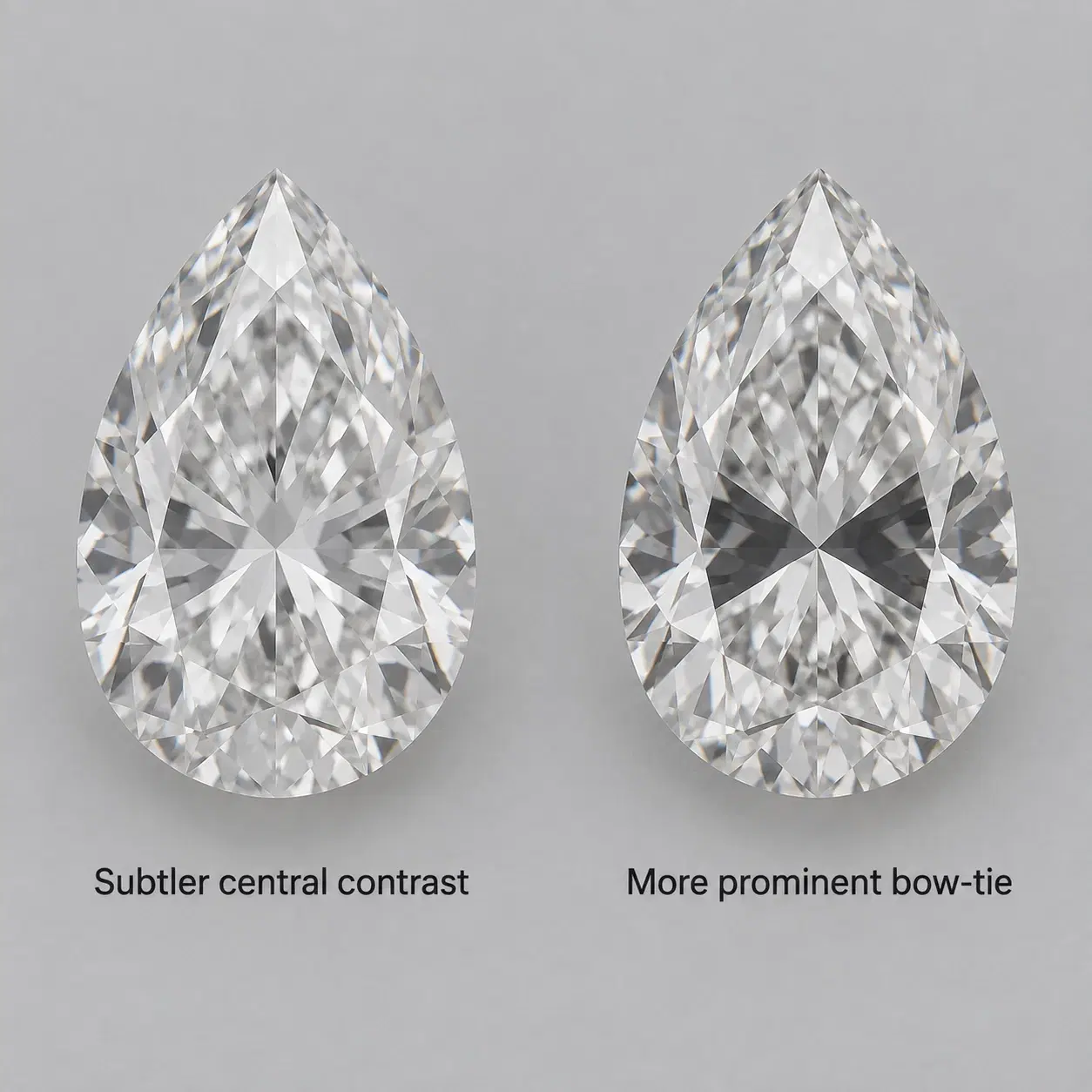
A bow-tie is a dark pattern that can appear across the middle of a pear diamond. Its prominence varies between stones, and a strong central shadow can interrupt the appearance of sparkle. GIA identifies this as a specific consideration when choosing pear-shaped diamonds. GIA’s guide to diamond shapes.
Our recommendation is to compare the actual diamonds in motion. Request a video where available, and ask for another view if the lighting or camera position makes the centre difficult to assess.
Watch whether the middle of the diamond becomes lively as the stone tilts, or whether a broad dark area continues to dominate. Some changing contrast belongs to the appearance of a faceted diamond; a single dark reflection should not be judged in isolation.
Use Cut Information Alongside Visual Inspection
Table percentage, depth percentage, polish and symmetry each describe part of the diamond. They should be considered together with its appearance and the assessments recorded on its report.
IGI’s fancy-shape cut-grading process includes proportions, craftsmanship requirements and light return. Its methodology specifically recognises that proportions alone cannot determine cut quality. IGI’s fancy-shape cut-grading methodology.
If a listing includes an overall cut grade, check where that grade comes from. A laboratory assessment and a seller’s descriptive label may not represent the same evaluation. Keep the actual report available while comparing the shortlisted stones.
Review Colour and Clarity Across the Whole Pear
For colour, request photographs under consistent lighting and compare the rounded end, centre and pointed section. This gives you a fuller impression than a tightly cropped image of the brightest area.
For clarity, consider the position of visible characteristics as well as the reported grade. Inclusions near the pointed tip deserve particular attention during professional inspection because this is a vulnerable part of the shape. GIA specifically advises checking inclusions near a pear diamond’s point. GIA’s pear-diamond selection advice.
Ask whether any characteristic affects the appearance or raises a setting concern. An inclusion that is difficult to see without magnification still needs to be understood in the context of its location and nature.
Protect the Point in the Finished Jewellery
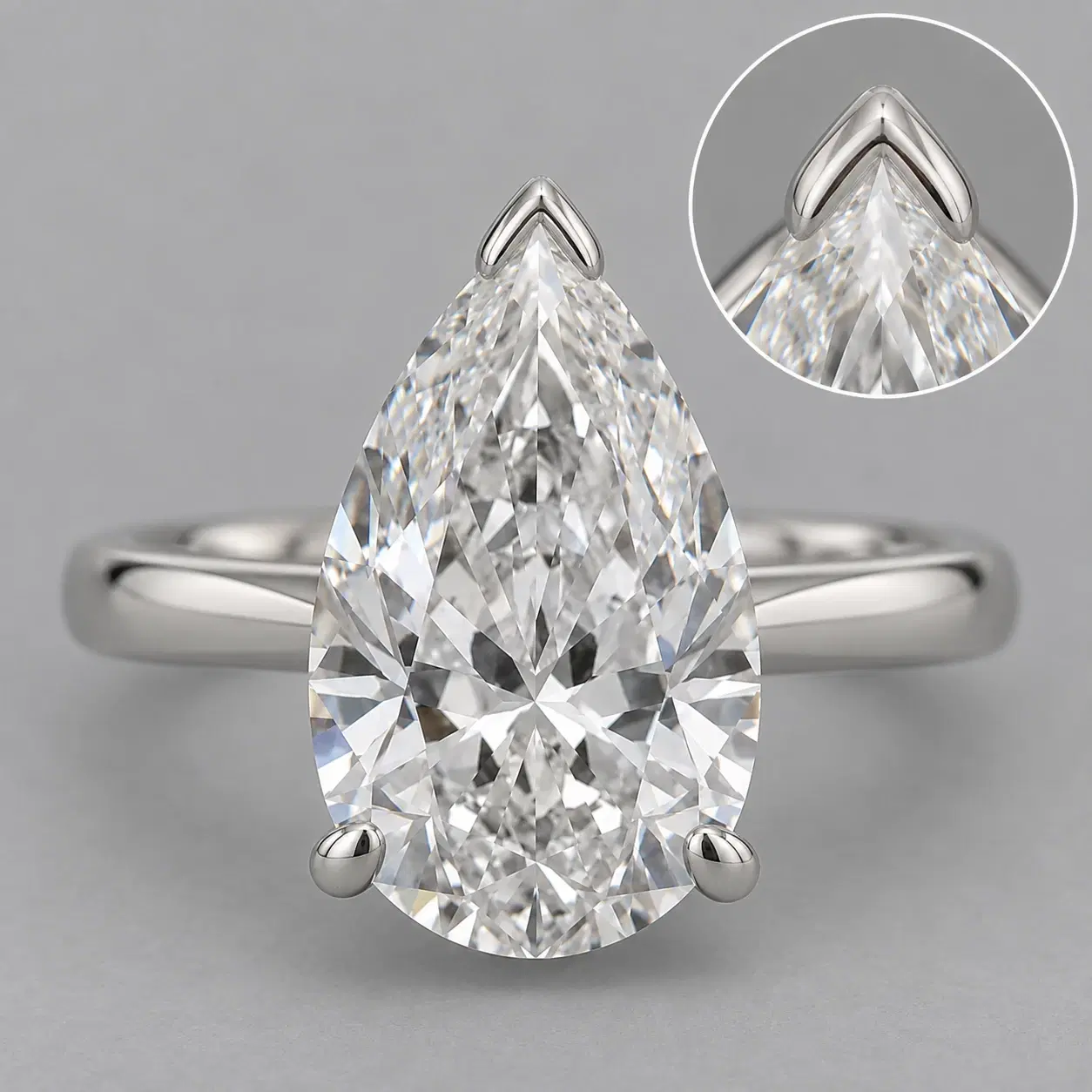
Plan tip protection before selecting the final setting. A V-shaped prong covering the point or a suitable bezel can help protect this vulnerable area. GIA’s guidance on protecting a pear diamond’s point.
Have your jeweller confirm that the setting fits the particular stone and provides appropriate support. The diamond’s exact outline matters, especially if you are adapting an existing design.
For an engagement ring that will be worn beside a wedding band, also review how the two pieces fit together. Our wedding-band matching guide covers that separate design decision.
Verify the Report and the Stone Identification
Request the report for the exact diamond being offered. Review its laboratory-grown identification, shape and cutting style, weight, dimensions and quality assessments. Check that these details agree with the listing and quotation.
IGI provides laboratory-grown diamond reports and online verification. Its documentation also explains how a report-number inscription can help identify a stone under magnification. IGI’s laboratory-grown diamond report information.
Verification involves both checking the laboratory record and matching it to the diamond. For more detail about the report fields, see our IGI-certified lab-grown diamond guide.
Prepare a Useful Pear Diamond Enquiry
A clear enquiry helps make the shortlist relevant from the beginning. Include:
- Your preferred shape: A broader or more elongated pear, with a reference image if helpful.
- Your practical requirements: Budget, approximate size and any measurements required by your jeweller.
- The information you need: Actual photographs or video where available, grading report, availability and a complete current quote.
Ask what the quotation includes, particularly whether it covers the loose diamond alone and whether delivery, taxes or setting charges apply. Our lab-grown diamond price guide explains the broader pricing considerations.
Frequently Asked Questions
Are pear-cut and pear-shaped lab-grown diamonds the same thing?
These terms commonly refer to the same teardrop-shaped diamond category. The report provides the more specific description of the individual stone’s shape and cutting style.
Does an Excellent symmetry grade mean a pear has no bow-tie?
No. Symmetry is one aspect of assessment and should not be read as a promise of zero visible bow-tie. Review the actual diamond’s central contrast and light return alongside its report.
Will a longer pear diamond always look bigger?
Not necessarily. Additional length may come with reduced width, changing the overall impression. Compare both measurements and photographs at the same scale instead of judging visible size from length alone.
Which direction should a pear diamond point in a ring?
The direction is a design preference. Pear diamonds can be worn with the point facing either way or set at another angle. Discuss the intended orientation with your jeweller so the setting, comfort and tip protection work together.
Find Your Pear-Shaped Lab-Grown Diamond
Tell Uniglo Diamonds what you like about the pear shape and how you intend to use the stone. Include your preferred proportions, budget and any setting requirements.
Request a shortlist with the details needed to compare each diamond’s outline, centre brightness and suitability for your design.